
The Weeping Time | Savannah
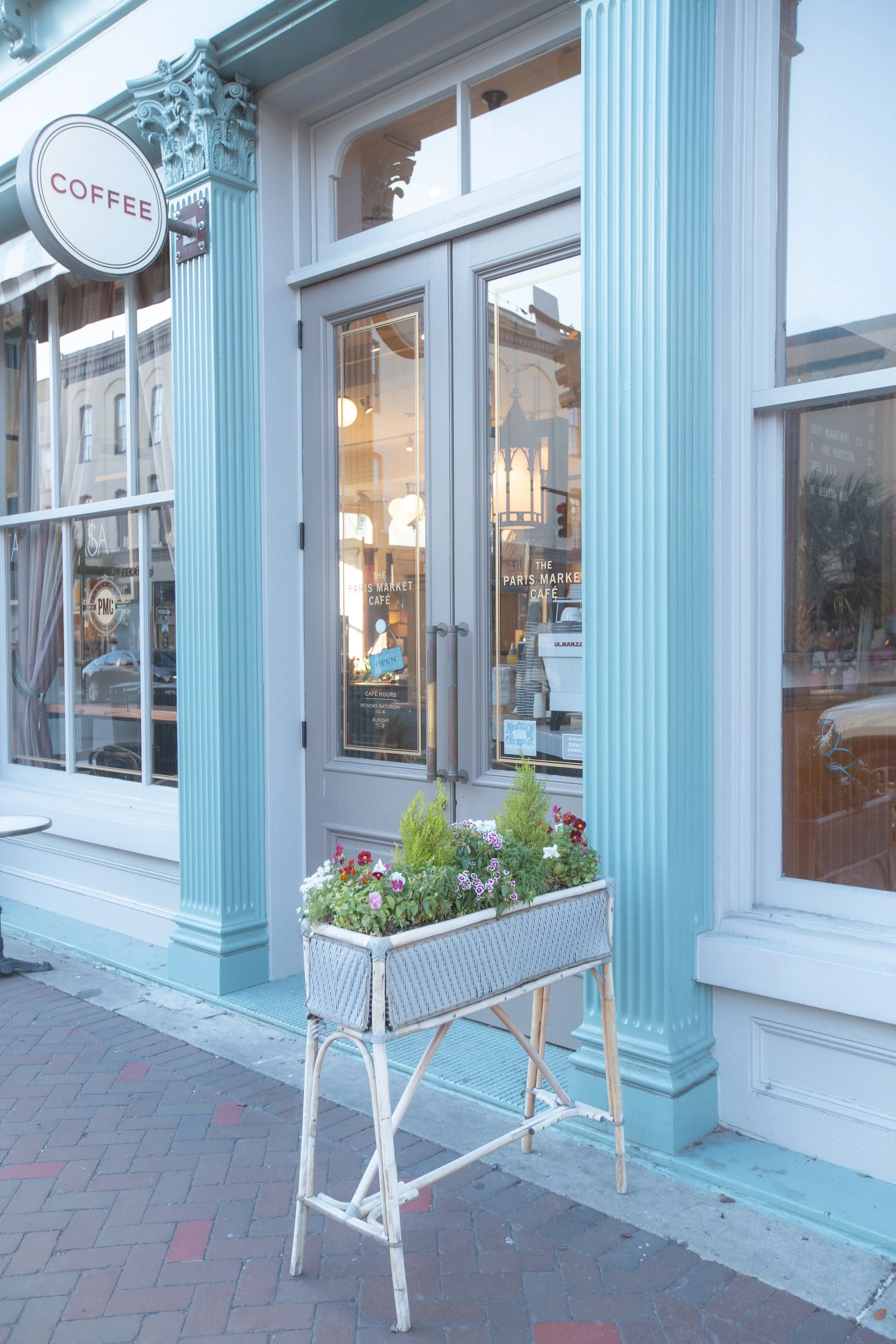
Paris Market - Savannah
A 5,000-square-foot bi-level boutique and café. Located in a restored 1874 Victorian building on Broughton Street, it is frequently cited by publications like Architectural Digest and Southern Living as one of the most beautiful shops in the South.
Away from the glitz and curated squares. Away from the carefully narrated plaques and monument of great men that let you depart the city believing that history was tidy, honorable, resolved. Away from the Old Town Trolley Tours route. Away from the quintessential Savannah, polished and perfumed ready for bachelor parties and bachelorettes. There is a version of this city that wants not to be remembered.
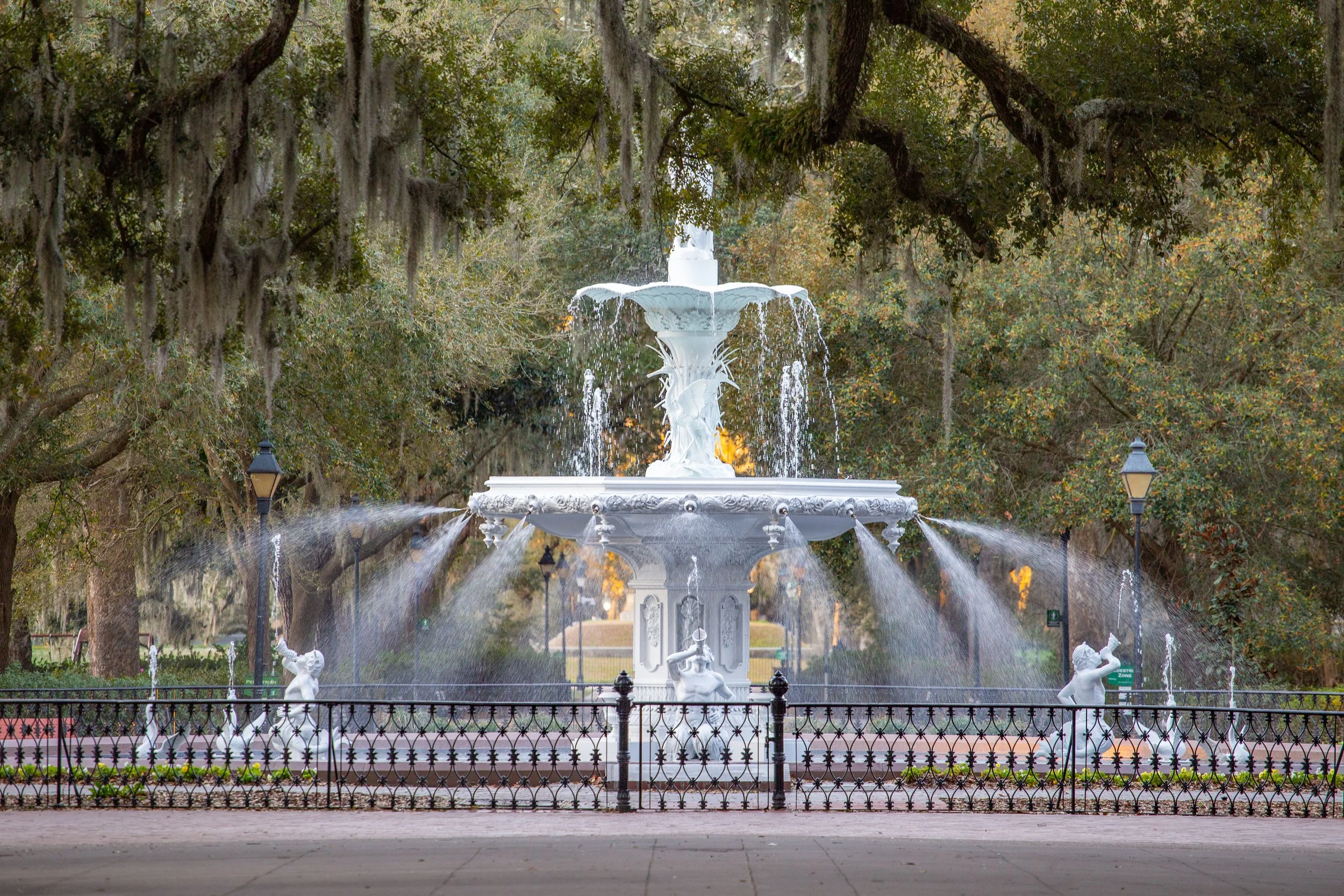
Forsyth Park
Beyond its iconic fountain, Forsyth Park doubles as an outdoor gallery of memory, anchored by the Civil War Memorial, one of the largest bronze and stone monuments of its kind in the South.
Running 2 miles west of the Historic District on West Bay St, the choreography changes. The spanish moss drapped oak canopies thin. I leave behind the ornamental confidence of Forsyth Park, with its theatrical fountain misting the morning light, and the pedestal certainty of Chippewa Square, where generals stand frozen mid-command.
I arrive instead at the Weeping Time Marker.
There is no fountain here. No bronze hero on a pedestal. No manicured grandeur. No pastel dresses turning for photographs beneath the oaks as they do at Wormsloe Historic Site. Only a modest sign behind a low fence near a bus stop, in a part of the city rarely framed for postcards. The neighborhood moves at its own cadence. A woman waits for the bus, arms folded against the heat. A man rinses soap from his car, water pooling along the curb. A child pedals tight circles on a bicycle.
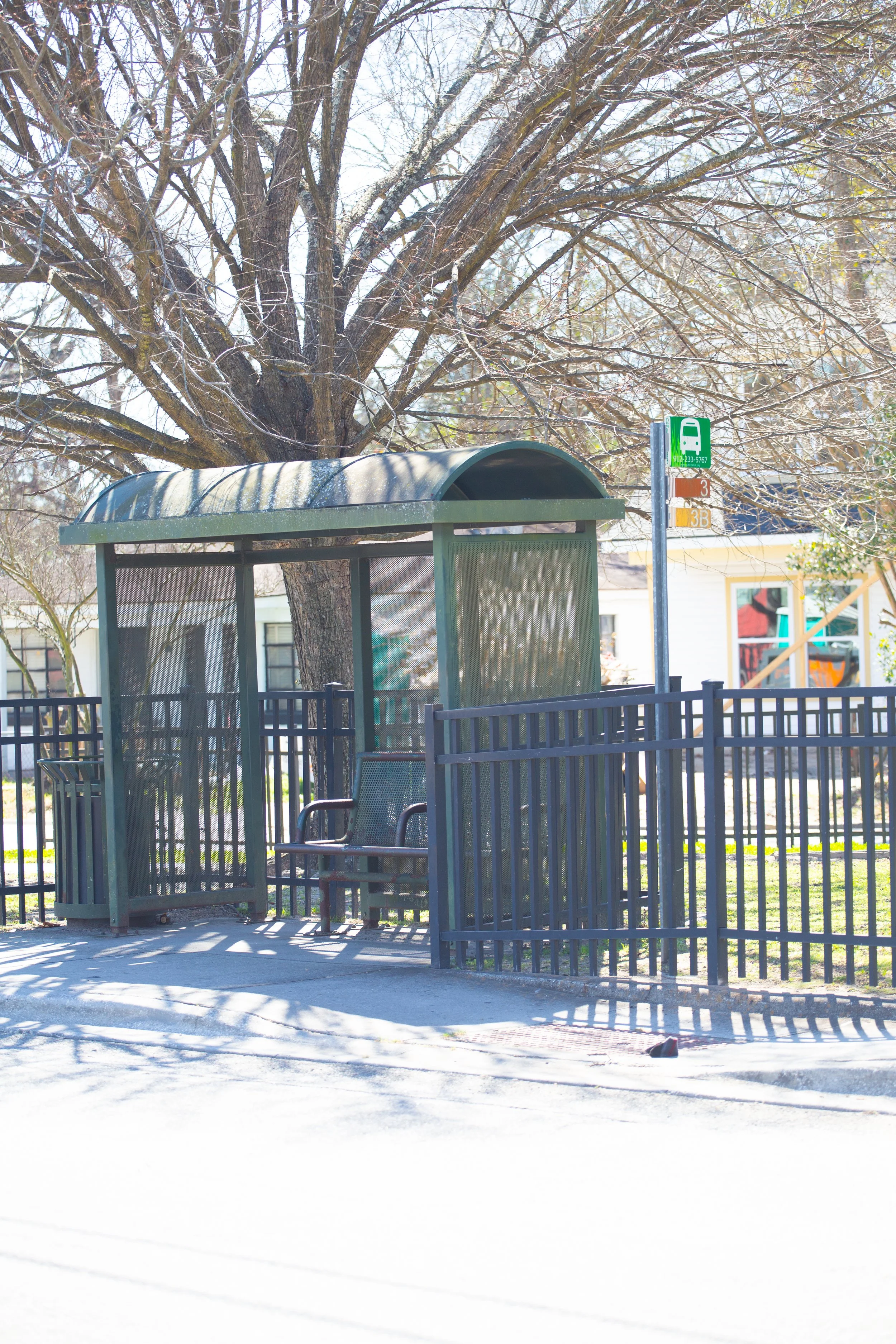
Bus Stop at the Weeping Time Marker
The Weeping Time Marker was erected in March 2008, after years of community insistence, against the national backdrop of Barack Obama campaigning for the 2008 elections.
The marker reads:
Largest Slave Sale in Georgia History:
The Weeping Time
One of the largest sales of enslaved persons in US history took place on March 2-3, 1859, at the Ten Broeck Race Course 1/4 mile southwest of here. To satisfy his creditors, Pierce M. Butler sold 436 men, women, and children from his Butler Island and Hampton plantations near Darien, Georgia. The breakup of families and the loss of home became part of African-American heritage remembered as "the weeping time." The event was reported extensively in the northern press and reaction to the sale deepened the nation's growing sectional divide in the years immediately preceding the Civil War.
Erected by The Georgia Historical Society and the City of Savannah
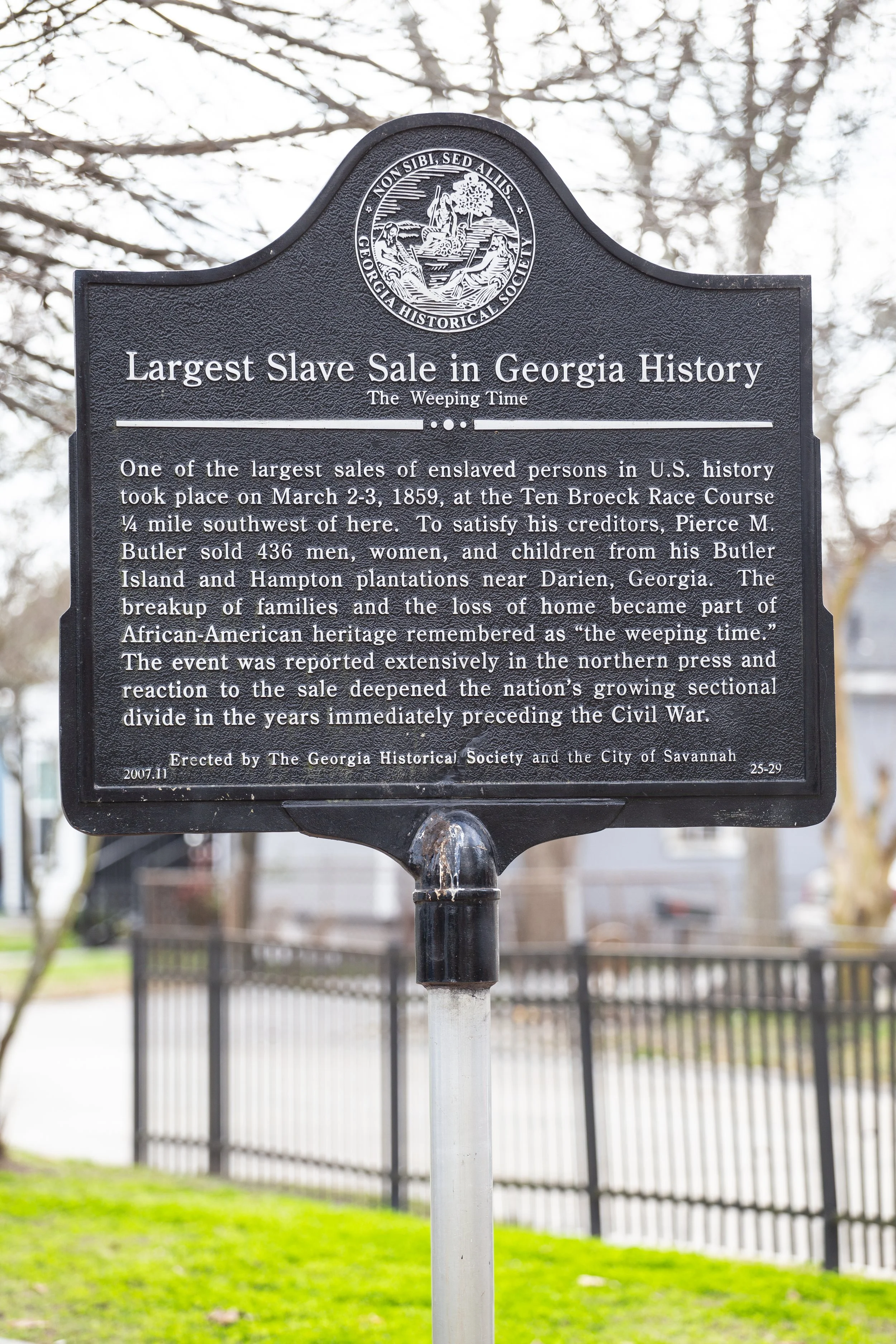
The Weeping Time
Pierce M. Butler (who had inherited the plantations 20 years earlier and was now in $700,000 debt) sold 436 men, women, and children from his plantations to settle his debts. Two days of rain. Two days of bodies catalogued and families divided. After the auction Mr. Butler pocketed $300,000 and left for a trip to Europe.
The Weeping Time may not appear on tourist maps, yet it is essential to understanding Savannah, a city celebrated for its 22 charming squares and geometric elegance. Cities, however, are also constructed from absences. From erased footprints. Running, for me, is a way of reading a place, not the guidebook version, but the footnotes. The sentences printed small at the margins. The clauses civic memory hopes you will scroll past. The grandeur of the squares, the wealth that shaped their architecture, the refinement of their proportions, all rest on labor once bought and sold. On tears that fell into Georgia soil and disappeared without inscription.
Until, finally, someone insisted on a marker.
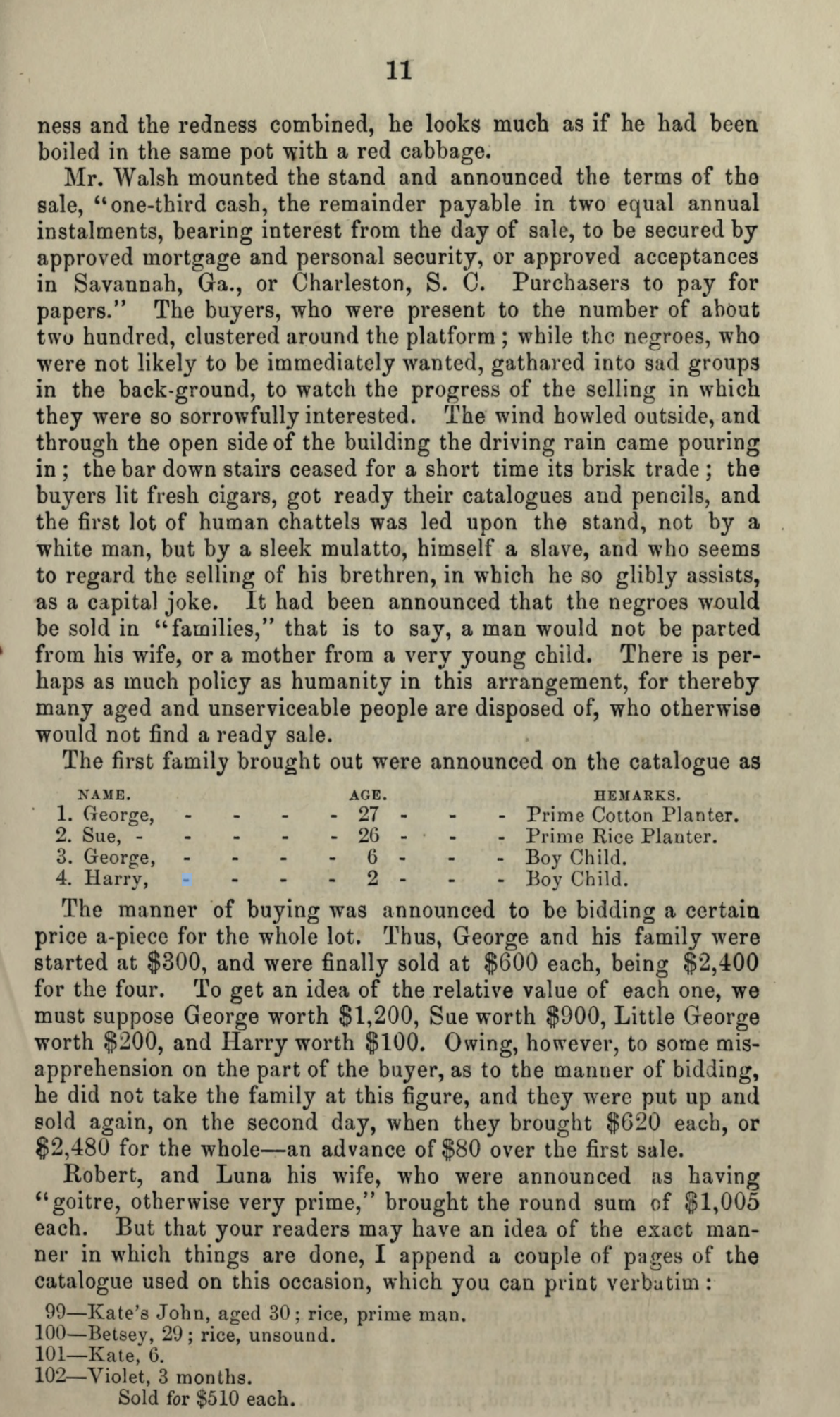
Great auction sale of slaves, at Savannah, Georgia, March 2d and 3d, 1859. Reported for the Tribune
