
The Square | Český Krumlov
Svornost Square
From OldInn Hotel
How did this village become so magical?
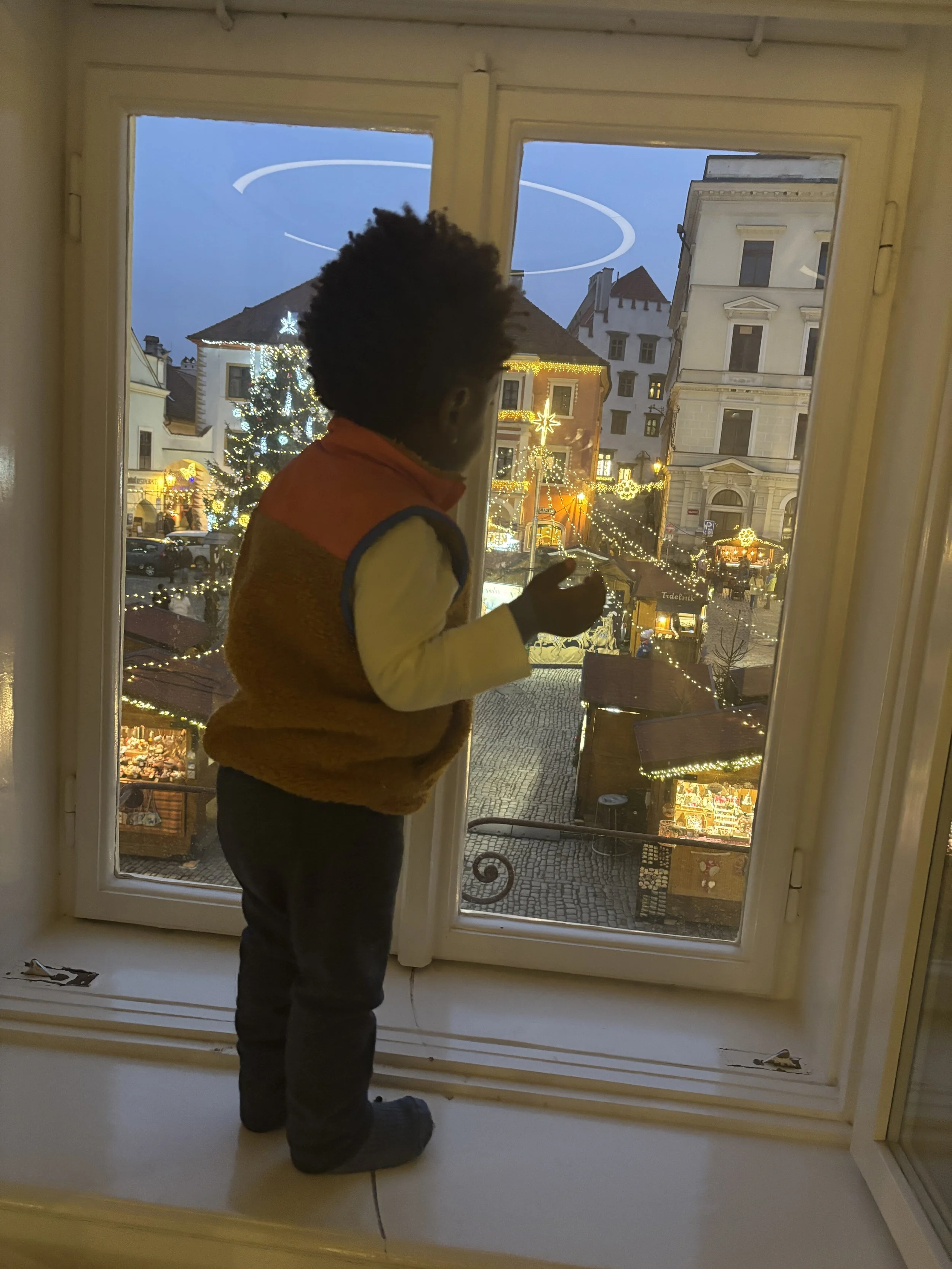
My son Kai presses his face against the window at dusk, looking down from the second floor of our hotel, the Old Inn, set directly on Svornost Square. The glass fogs slightly from his breath. He scans the scene, pauses, and delivers his verdict with scientific precision: wow.
Below us, the square glows, a soft amber light settling gently onto cobblestones polished smooth by centuries of footsteps. Strings of lights drape lazily from wooden market stalls. The air smells of fresh evergreen pine, layered with cinnamon, cloves, and mulled cider. Christmas music drifts through the square. “Jingle Bells. Jingle Bells.” In English. This catches me off guard. We are in the Czech Republic. I expected Czech carols.
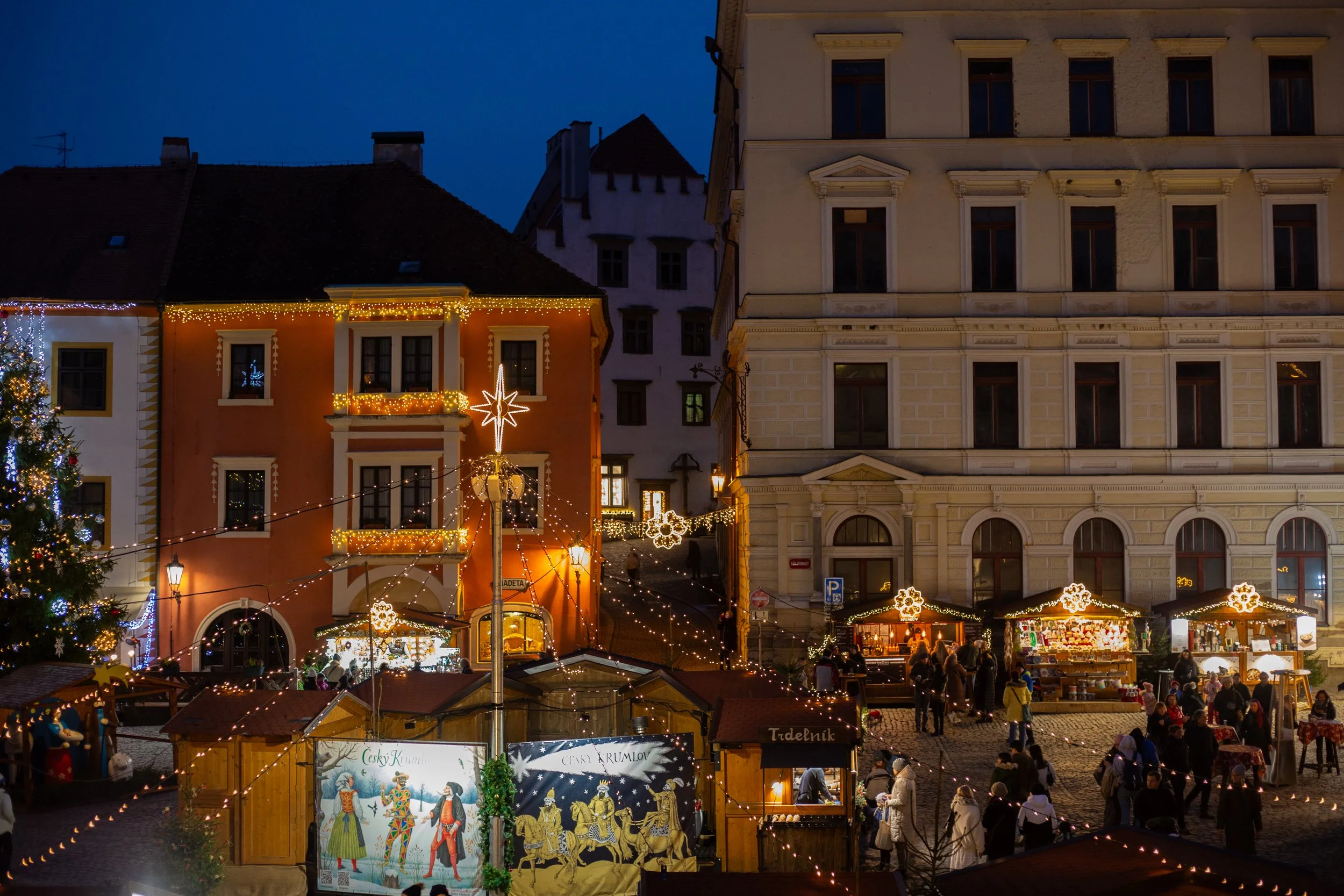
The market hums with motion. Wooden stalls glow from within, shelves stacked with carved toys, glass ornaments, wool scarves, and knitted hats. I spot the stall where I bought my scarf and wool hat, because I lose those on every trip. To the right, a merry-go-round spins slowly, trimmed with evergreen garlands and soft lights. Children circle past on painted horses and tiny cars, bundled in hats and mittens. Across from it stands a manger, a carefully constructed Bethlehem scene. Baby Jesus lies calmly in the straw while the three wise men look on. On the far left, the town hall stands steady and elegant, its historic façade wrapped in lights and wreaths. Nearby, steam curls into the cold air from a stall selling hot wine. I have never fully understood hot wine. Do you not just boil the alcohol out and end up with warm grape regret?
Svornost Square Christmas Market
Tourists drift through the square in a daze, clutching mugs of hot wine. Their faces tilt upward, then sideways, then back again, necks strained in every direction, as if the square might disappear if they look away too long. The few taxis brave enough to enter surrender completely, inching along, yielding to wonder.
This is December in Český Krumlov, the most visited village in Czech Republic.
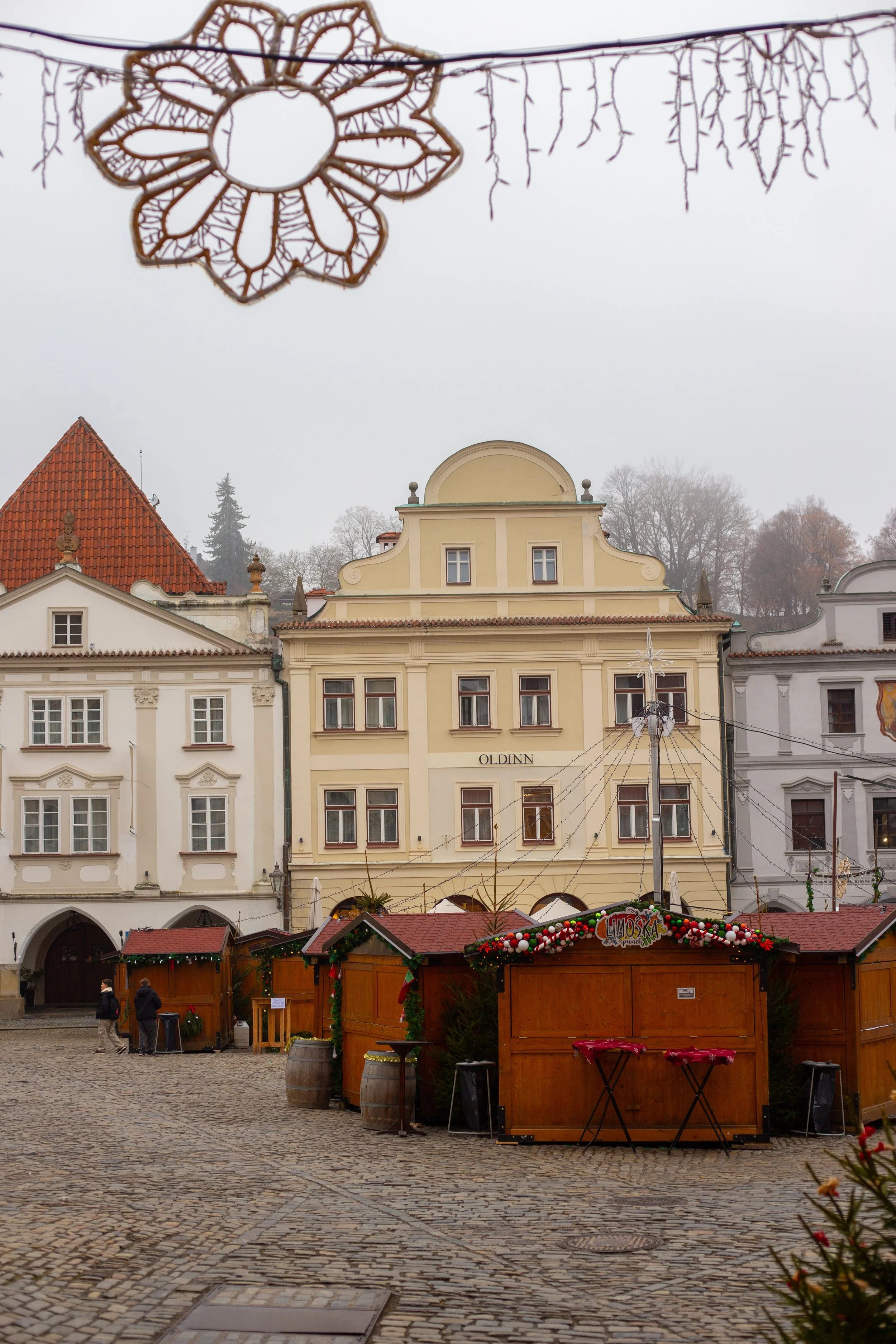
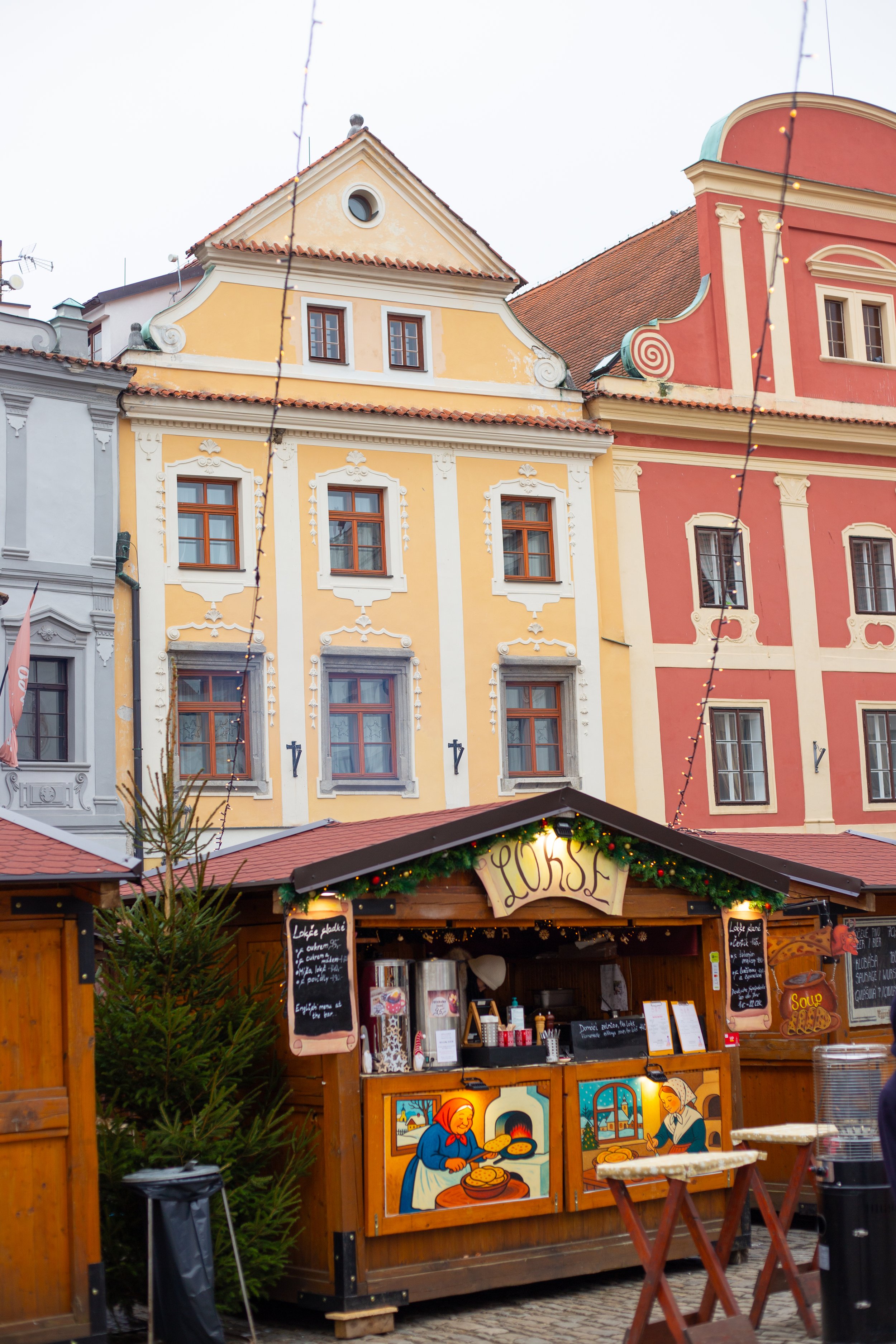
Hotel Old Inn on Svornost Square
I pull myself out of the glow of the Christmas square and rewind the scene to October 20, 1938, standing in this same place. From this vantage point, the view is unrecognizable. The village we now call Český Krumlov was then known as Krummau. The square is packed tight, its edges swallowed by uniforms and flags. Nazi insignia hang heavily from the town hall on the left, fabric draped with certainty. Soldiers stand shoulder to shoulder, flowers scattered at their boots and across the cobblestones. Hitler is giving a speech.
Just weeks earlier, on September 30, 1938, European leaders had signed the Munich Agreement, handing over the Sudetenland, a German-speaking border region of Czechoslovakia, to Adolf Hitler in the name of “appeasement,” believing he would be satisfied and not invade the rest of Europe. We know what happened next. Within months, the rest of Czechoslovakia fell. Soon after, much of Europe followed. In Český Krumlov, this new power settled in quickly. The village’s only synagogue was seized and converted into a Hitler Youth club.
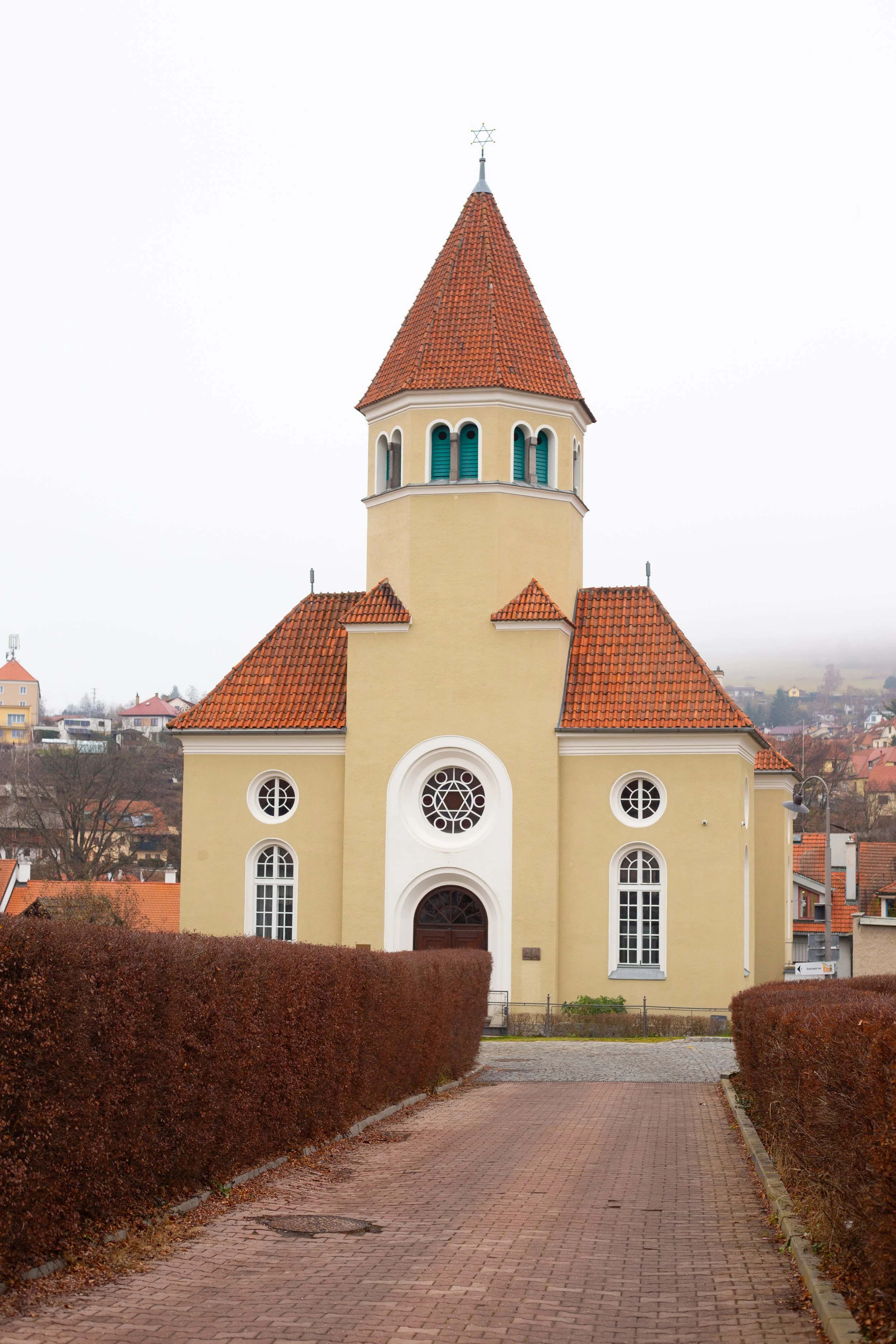
Český Krumlov Synagogue
I peel back the scene again and uncover another moment. This time, it is May 1945. From the same square, the flags are different. American flags across from the Hotel OldInn. The liberators. For a brief moment, the village breathes. There is hope here. Real hope. It does not last. The Americans leave almost as quickly as they arrive, and another flag takes their place on the town hall. A red banner. A gold hammer and sickle. A gold-bordered red star. With it, Český Krumlov slips quietly into despair and disrepair.
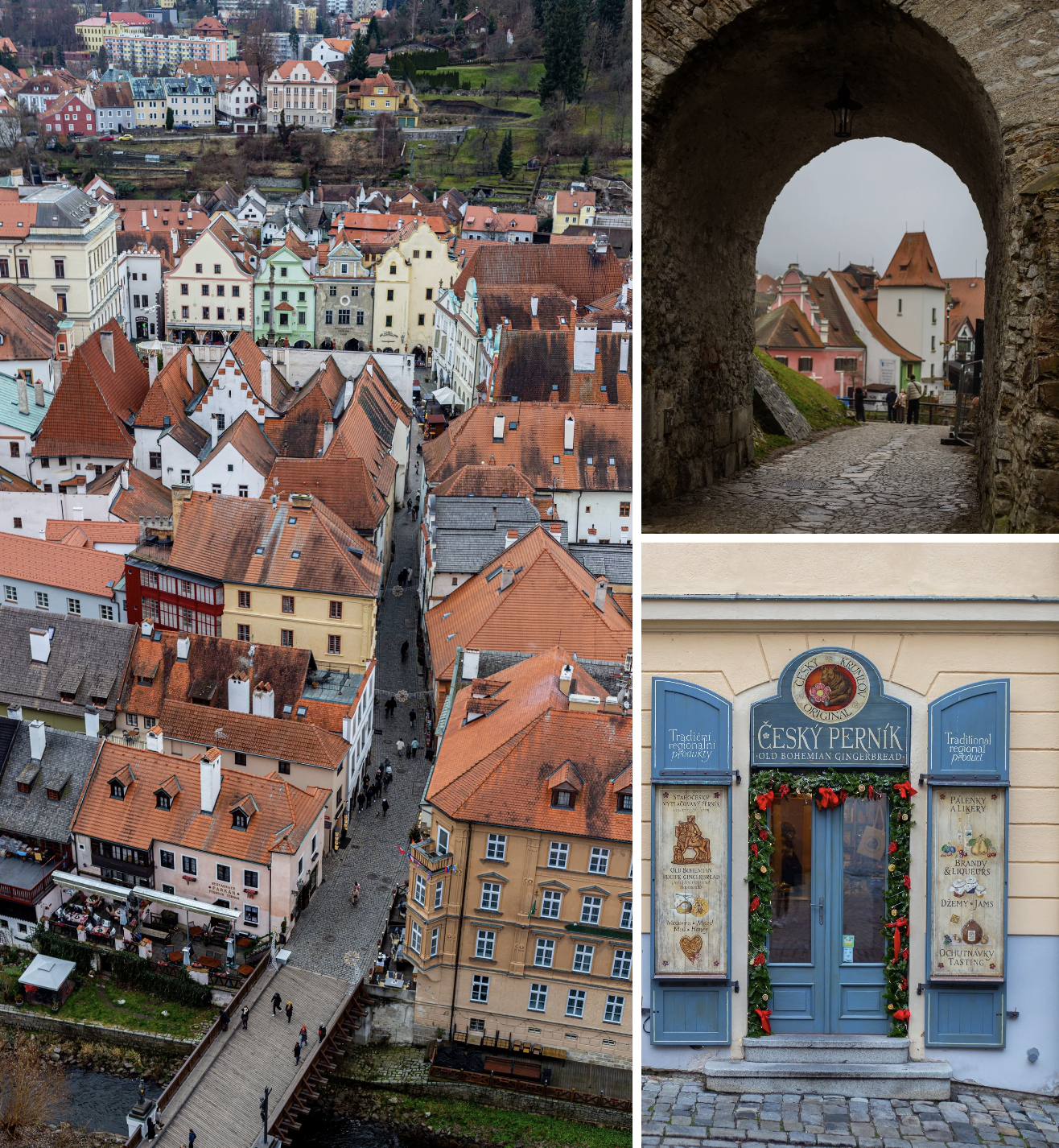
Český Krumlov
There is an African proverb, translated into English, that says, when two elephants fight, it is the grass that suffers. Český Krumlov knows this well. This postcard-perfect village in the Czech Republic, recognized as a UNESCO World Heritage site in 1992, has spent centuries absorbing the consequences of struggles never of its choosing. Yet the village endured. It adapted. It learned how to remain. What stands today is not innocence preserved, but resilience refined: a village held gently within the horseshoe bend of the Vltava River, still standing, still attentive, quietly fairytale.
I am pulled back into the present when my son snaps me out of my thoughts, singing loudly and proudly in his 2 year old voice, “Jingle Bells, Jingle Bells…..”
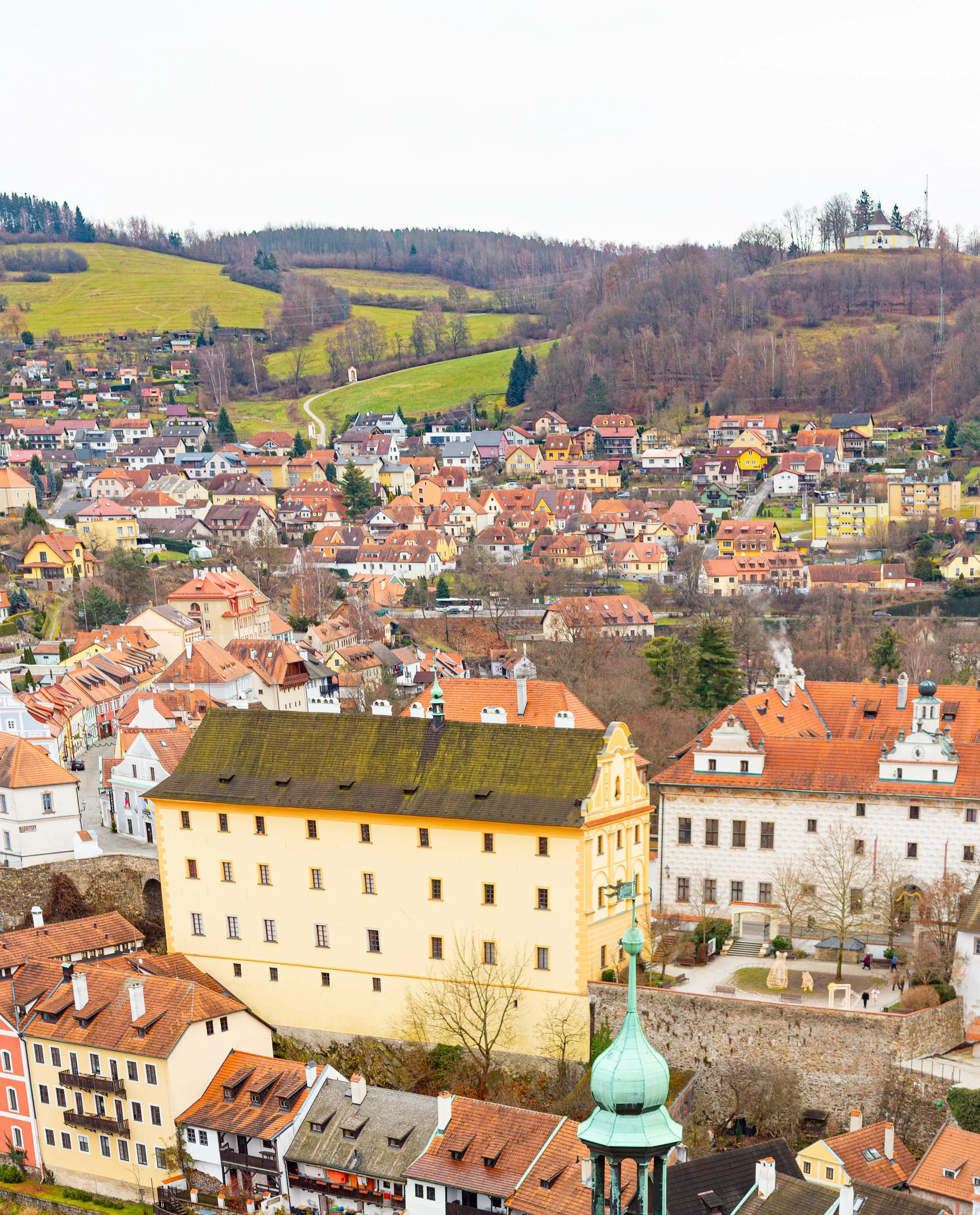
Český Krumlov, a UNESCO World Heritage site
