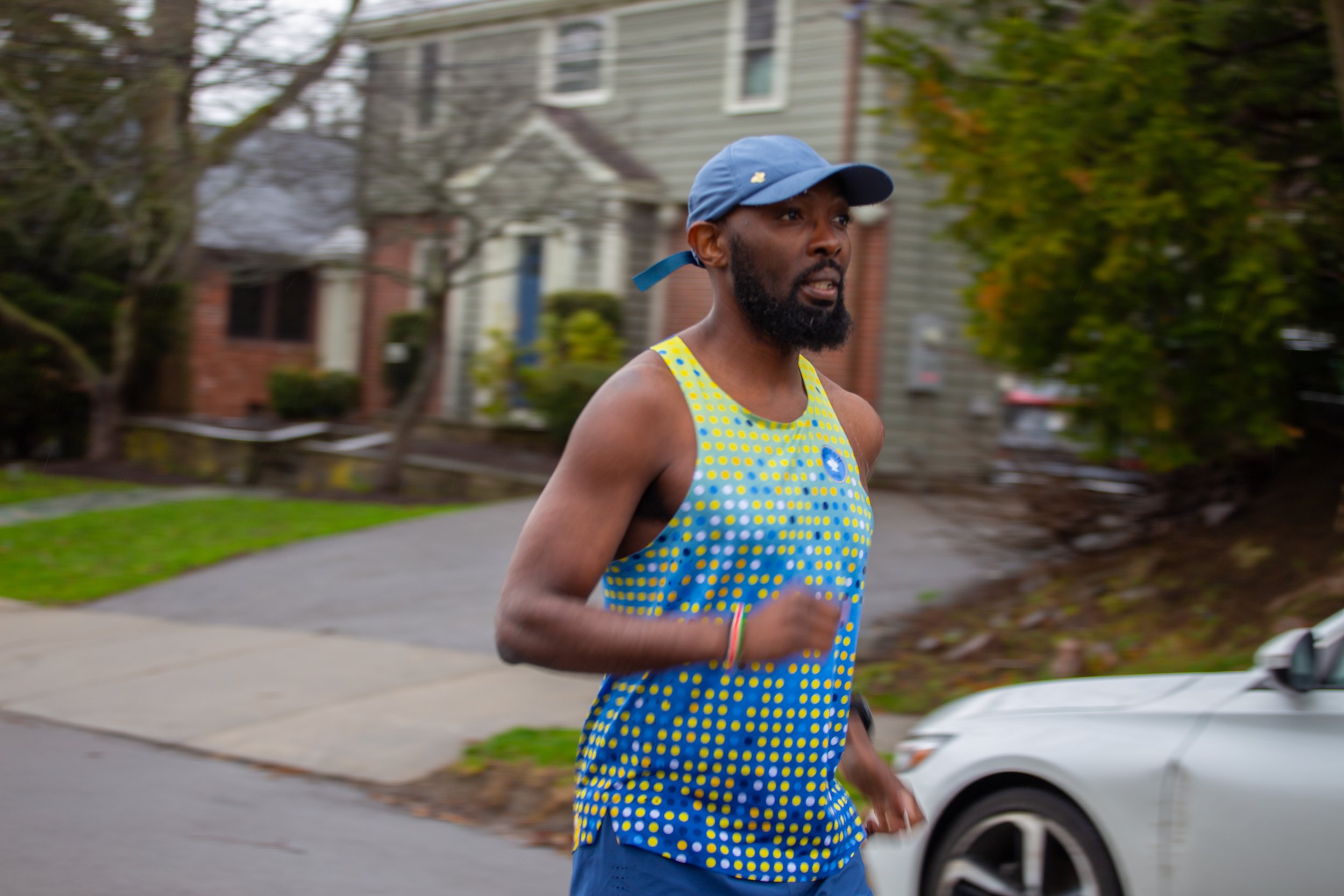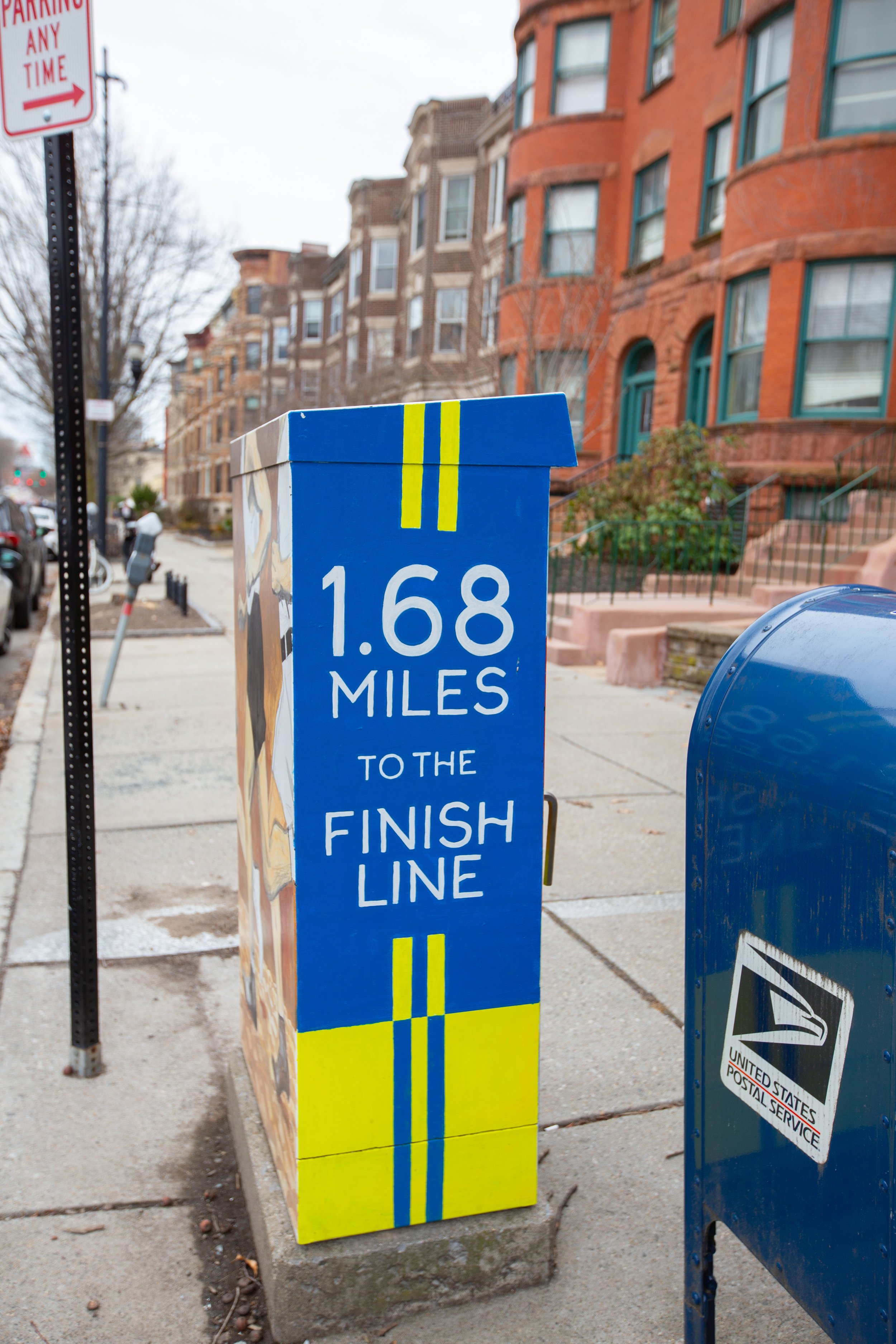
You’re visiting Boston and want a long run? You don’t need a bib or a qualifying time. You just need a decent pair of legs. Here is a memorable route: the final ten miles of the Boston Marathon course, that includes the famed Newton Hills.
First, coffee stop at a local favorite, Pavement Coffeehouse on Newbury Street.
Getting Out There
You are likely staying somewhere in Back Bay, with Copley Square, the marathon’s finish line, in your backyard. Your run will end right back here. But first, you need to get to the start of the hills. Take the Green Line train toward Riverside and ride it out to Woodland Station. It is about a 45-minute ride. Sit, sip your coffee, and watch the city give way to the suburbs. By the time you step onto that platform, you are ready to move. If you prefer the commuter rail, the Framingham Line will drop you at Wellesley Farms. Either option works. Both place you exactly where you need to be.
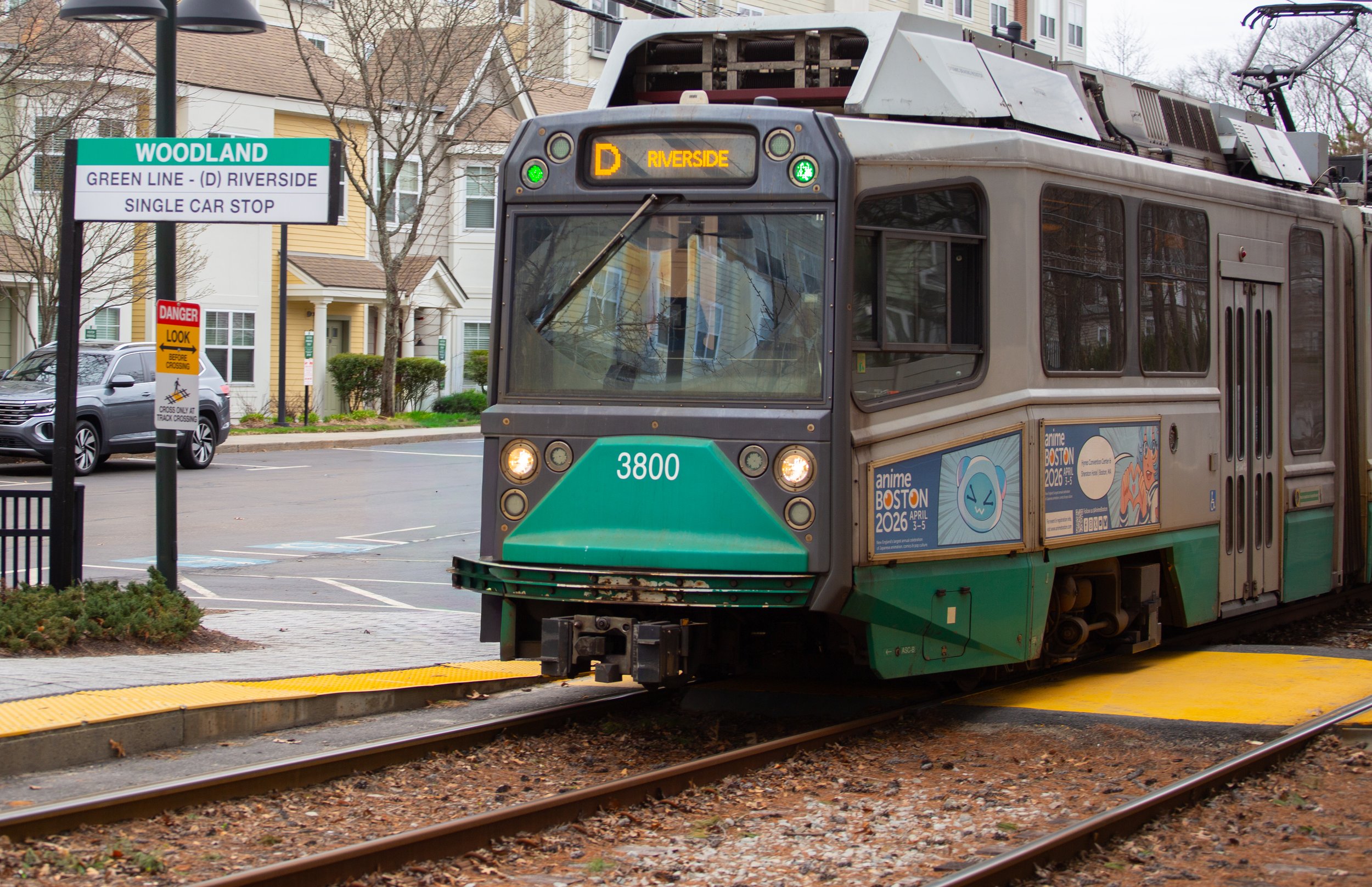
Woodland Station
From Woodland Station, you will experience the course in reverse. Begin with a gentle one-mile downhill warm-up along Washington Street. You are heading toward a local Italian restaurant, Papa Razzi in Wellesley. When you see it, stop. Look around. Take a breathe.
You are now standing at mile 16 of the Boston Marathon.
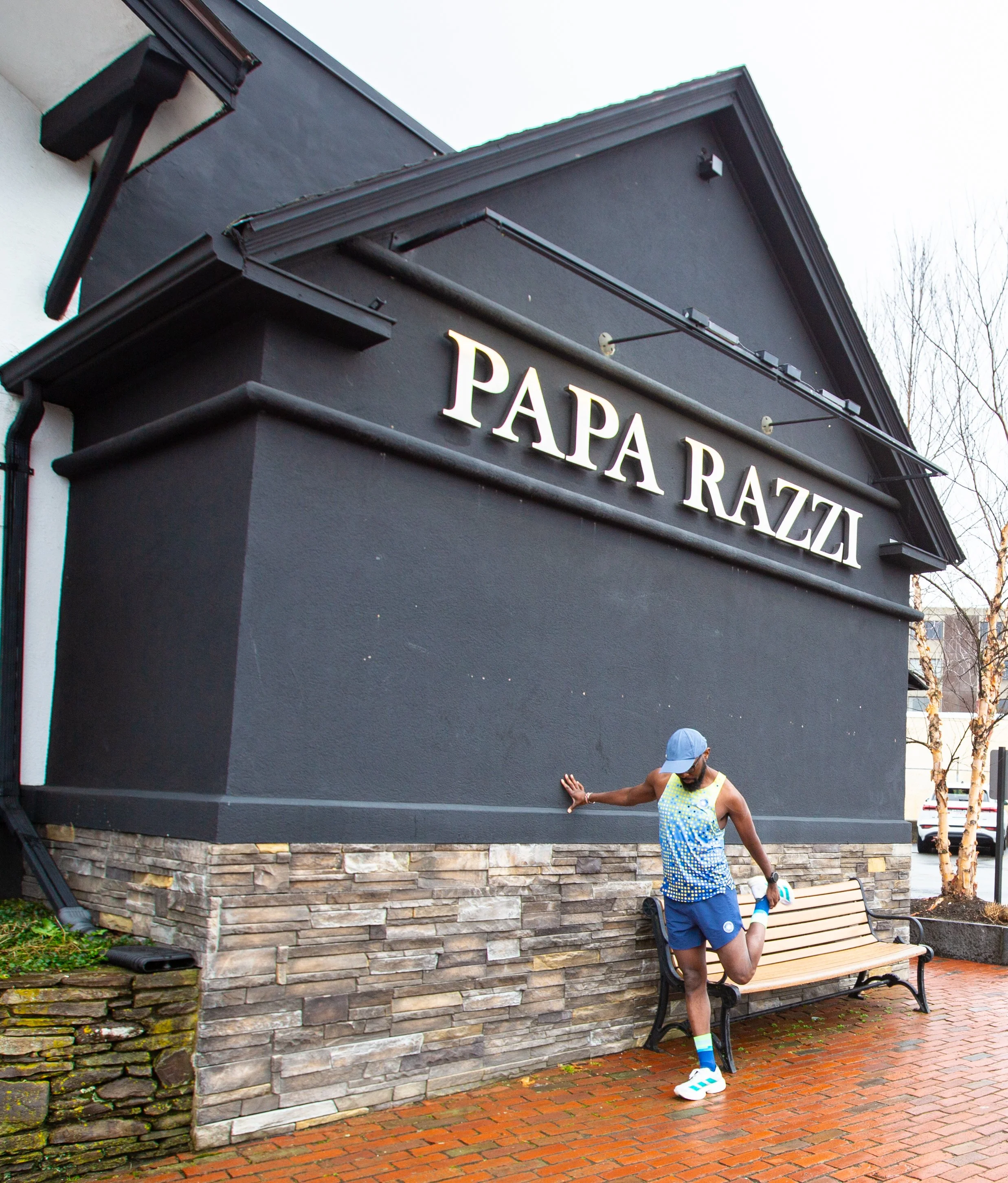
Papa Razzi, an Italian Restaurant, is right on Mile 16
It is early, maybe 6:00 AM. The air is cool, slightly sharp. A handful of runners are already out, fine-tuning their hill strategy, and today you are one of them. You are warmed up now, ready to enter the Newton Hills’ psychological experiment. From miles 16 through 21, the hills are designed to break both rhythm and resolve. The road rises in subtle curves, never revealing its summit, always asking for just a little more.
Start your watch.
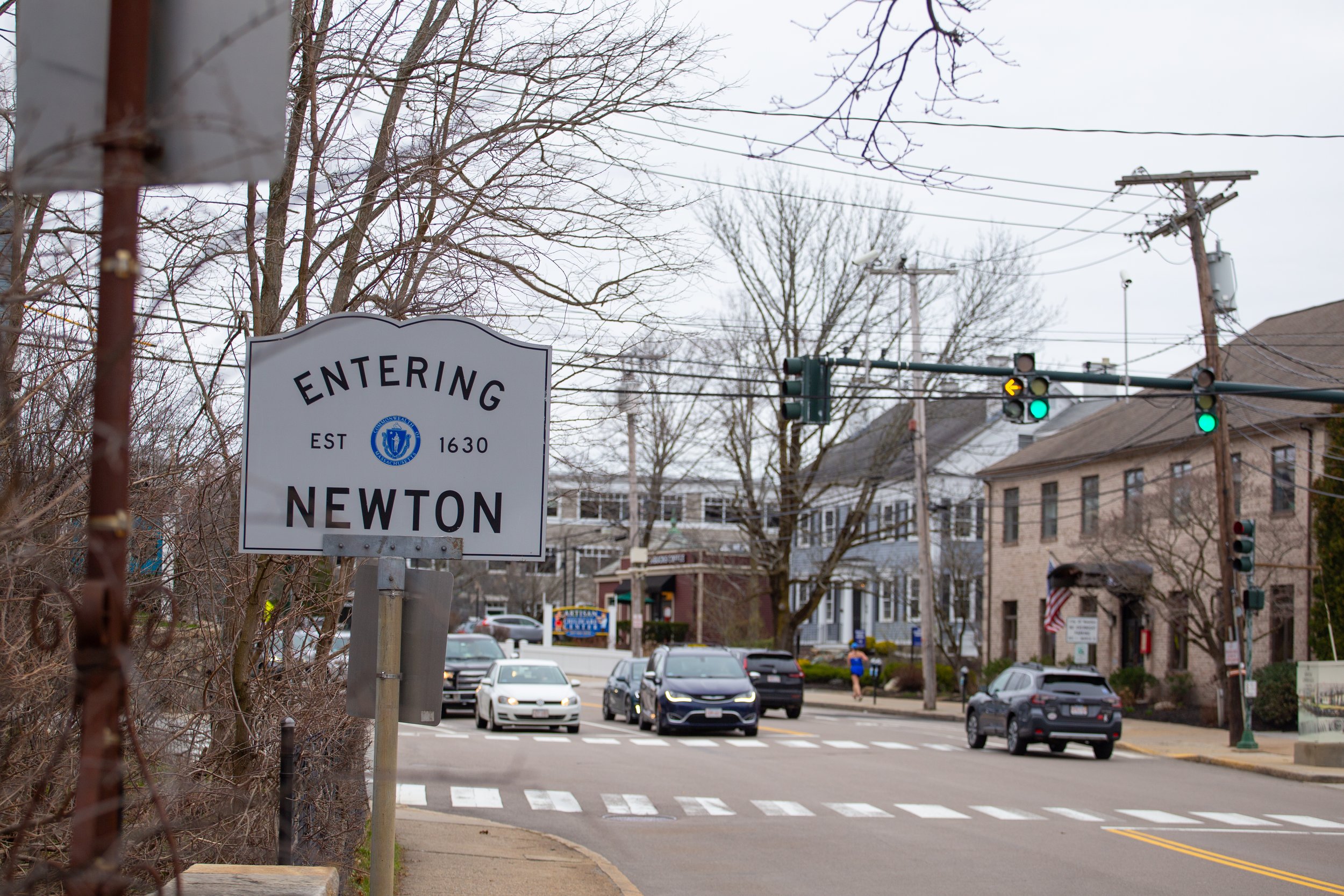
Entering Newton
The Hills. All Four of Them.
There are four hills. Everyone talks about Heartbreak Hill as if it is the whole story, but Heartbreak is only the fourth act. The course has been building toward it for miles. Most newcomers to the Boston Marathon reach mile 16 with their quads already trashed.
That is not you today.
Hill One, Washington Hill.
You will see it right away, the road tilting up ahead of you. Nothing dramatic, just a steady half mile at about 2.5 percent. Your legs are fresh, the grade is kind, you barely notice it. After you crest it, you get a mile of flat, fast and easy.
Hill Two, Brae Burn Hill.
At mile 17.5, you turn left onto Commonwealth by the Firehouse. Then Brae Burn Hill appears. Steeper than the first one, about 4 percent, compact at roughly 0.4 miles, but it has an attitude. Nasty attitude. You will feel your stride shorten. Your breathing reorganizes. In 2024, a guy ran up next to me on this hill, completely gassed, and asked, “Is this Heartbreak Hill?” I had to tell him no; this is hill two of four. I watched the hope drain right out of his face. You are not that guy. You know what is coming.
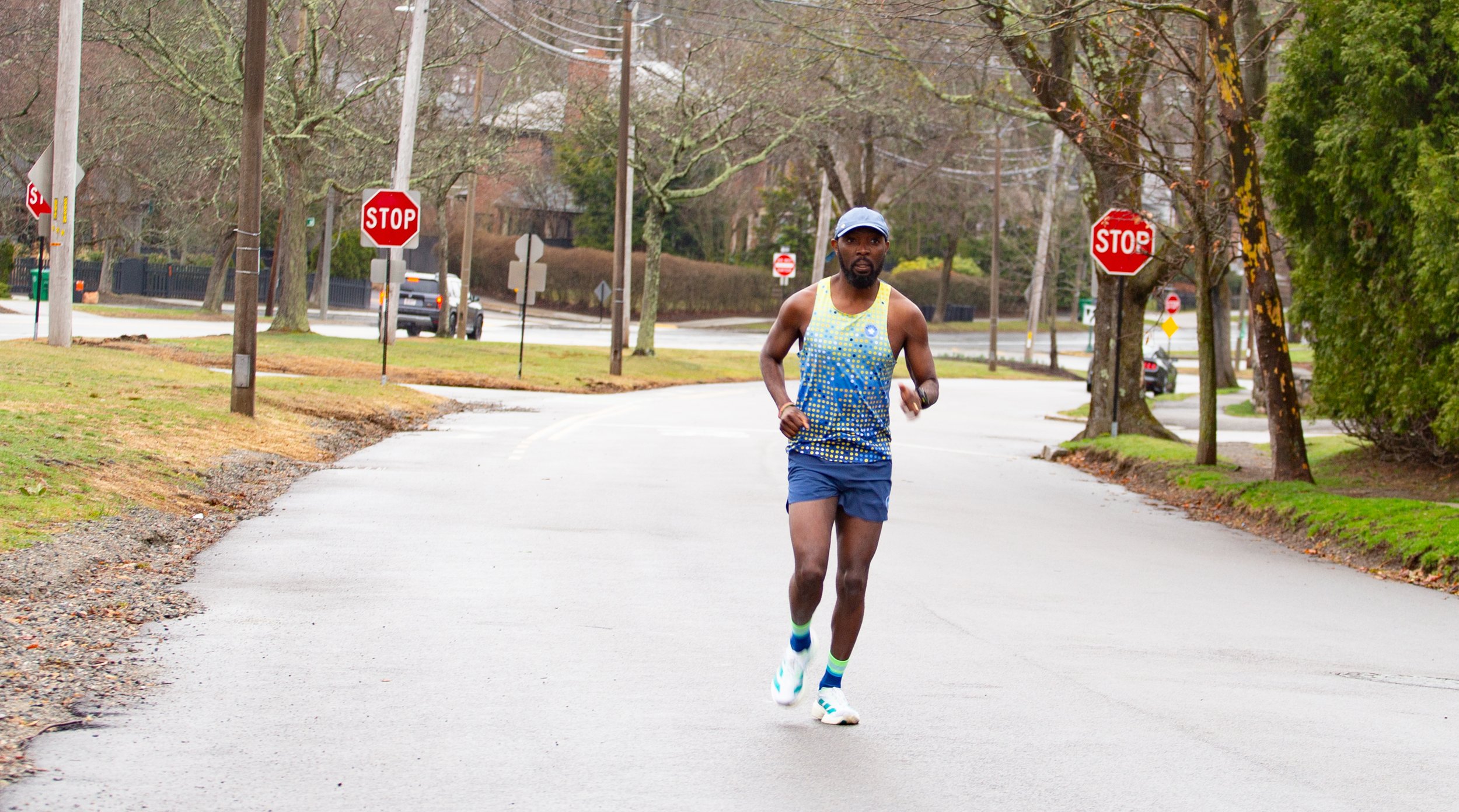
Negotiating with Brae Burn Hill
And if you do start to feel defeated, borrow the spirit of Katherine Switzer in the 1967 rebellion. Picture her here, deep into the race, already carrying the quiet exhaustion that settles in around these miles. Then suddenly, it is not just the hill she is fighting. A race official breaks from the sidelines, grabbing at her, trying to tear her off the course – because women were not allowed to race then. For a moment, everything compresses. The effort. The fear. The disbelief. But she does not stop. She keeps moving forward, becoming the first woman to officially enter and run the Boston Marathon in 1967 (70 years from the inception of the marathon), wearing bib 261, finishing in about four hours and twenty minutes.
After Brae Burn, you get another 1.5 miles of open road. This stretch can be fast if you are feeling good. Let your legs go a little. You have one buffer before things get serious.
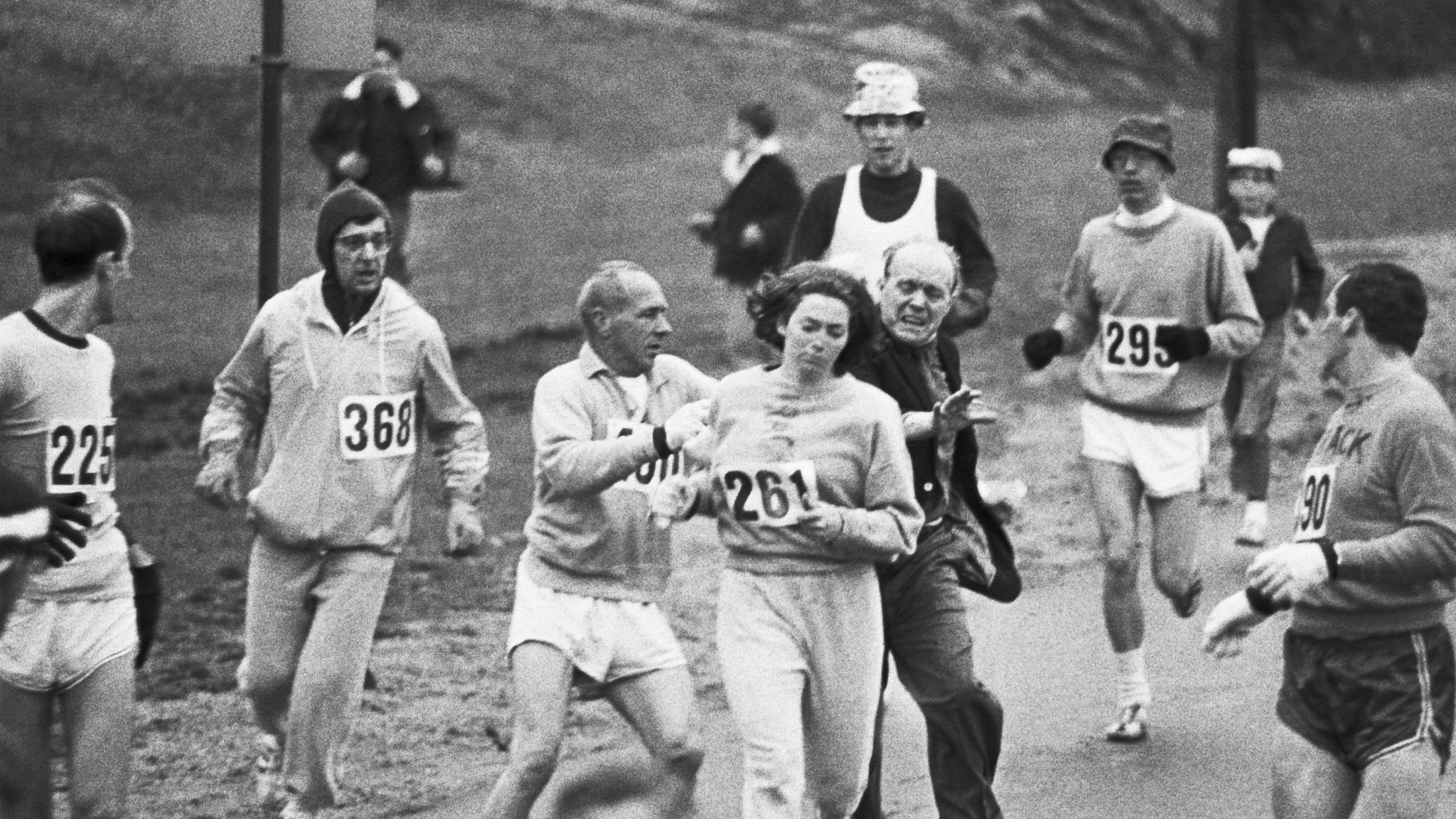
Jock Sempe trying to pull Katherine Switzer out of the 1967 Boston Marathon. Picture Courtsey of Skysports
Hill Three, John Kelly Hill.
John Kelly Hill comes at Mile 19.2 at about 3 percent grade over 0.4 miles, which sounds gentle and kind of is, except by now you have been running for a while and your body’s math has changed. Small hills start to feel like mountains. You get about a mile of flatter ground after Kelly. Reset. Breathe. Look around. Because after this-
Hill Four, Heartbreak Hill.
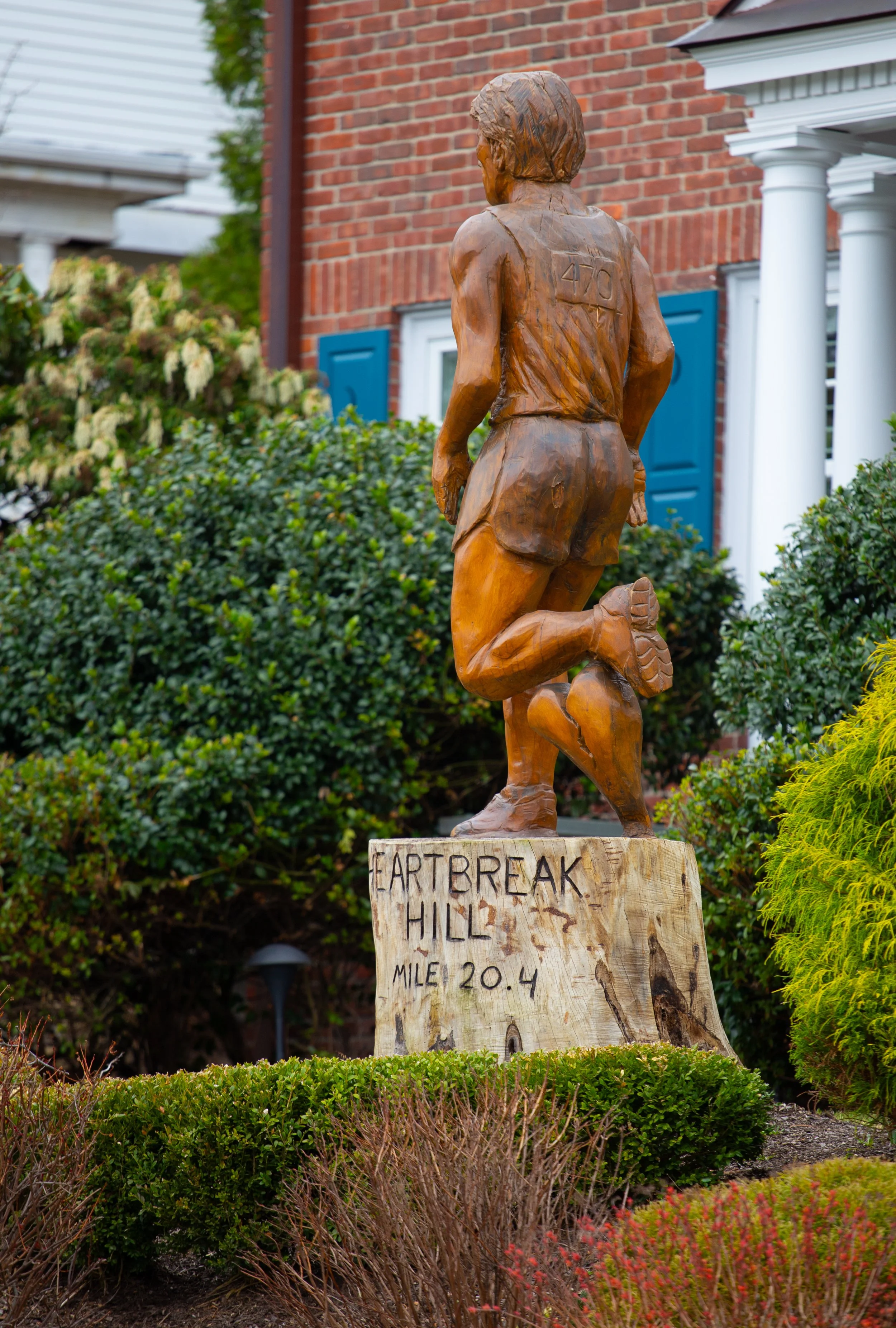
The Sculpture at the base of Heartbreak Hill
At mile 20.4, you will see it. The road rises at the end of a long straight stretch, and there is a wooden sculpture of a runner at the base, arms pumping, leaning into the climb. Someone put it there as a warning. Or maybe encouragement. Hard to say. Heartbreak is not the steepest hill, about 3 percent over half a mile, basically the same as what you have already done. But it hits at the exact moment when your body has stopped giving you the benefit of the doubt. Every step costs a little more than it should. The hill keeps revealing itself. You think you are almost there, then there is more. This is when you go to your “cookie jar,” as David Goggins calls it, and pull out the reasons you showed up in the first place.
And then you are at the top. Congratulations!
The Last Five Miles
Do not get too comfortable up there. You have still got five miles. The first 21 miles of Boston Marathon are the first half marathon, now the final 5.2 miles are the second half marathon.
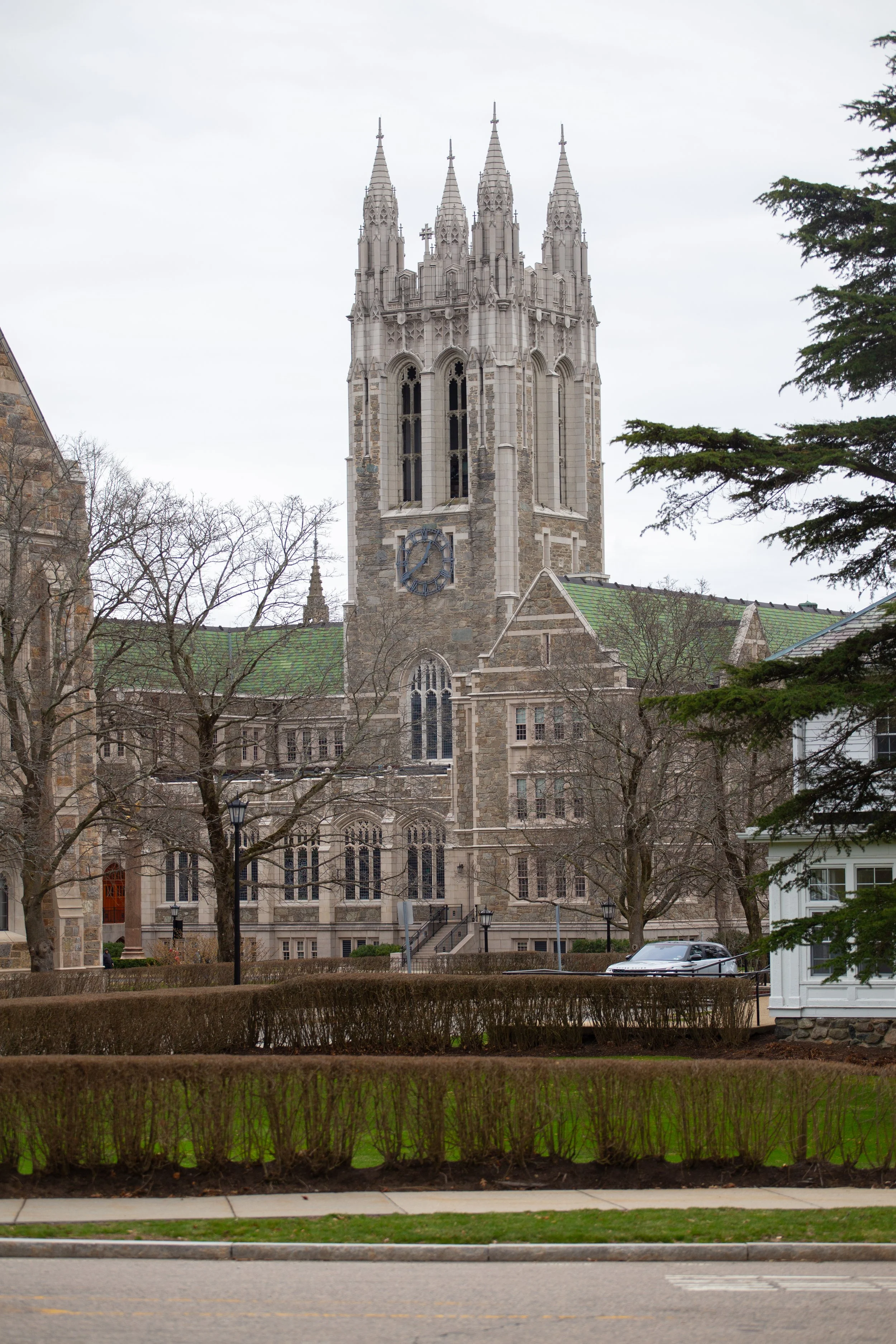
Boston College
The descent from Heartbreak is fast and euphoric if your legs are still there. Your legs remember what they are for, your stride opens up, and for a minute everything is easy again. Boston College is on your right, all Gothic towers and stone, the campus quiet in the early morning. Despite the myth, Boston does not finish downhill. There are small rolling hills all the way to Copley, and your quads are going to have opinions about each one of them.
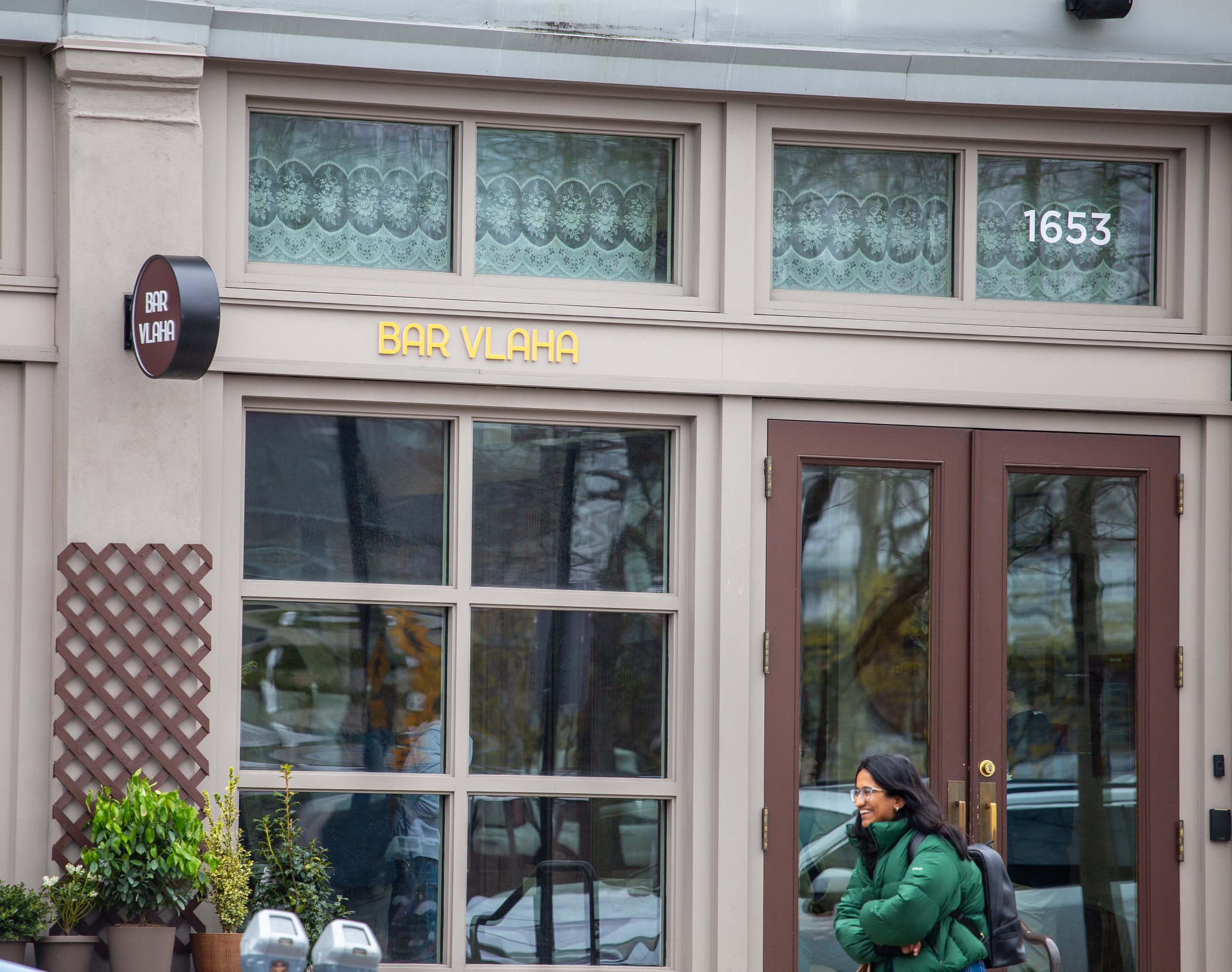
Bar Vlaha one of the eateries on Washington Square
You cross from Newton into Brookline, and the city begins to return. Train tracks. Overhead wires. Apartment buildings. Trees arching overhead. It is a lovely stretch after Cleveland Circle. Then the restaurants start appearing and suddenly you have a reason to finish. Bar Vlaha, a Mediterranean eatery, on your right around mile 23.2. Then Bar Lunette a cozy French inspired cocktail petite bar, little farther on mile 24 on Coolidge Corner. Mecha Noodle Bar across the street, and yes, you are absolutely going back for noodles tonight. And Oasit’s Sweet Dessert Studio, because you will have earned something sweet and you know it.
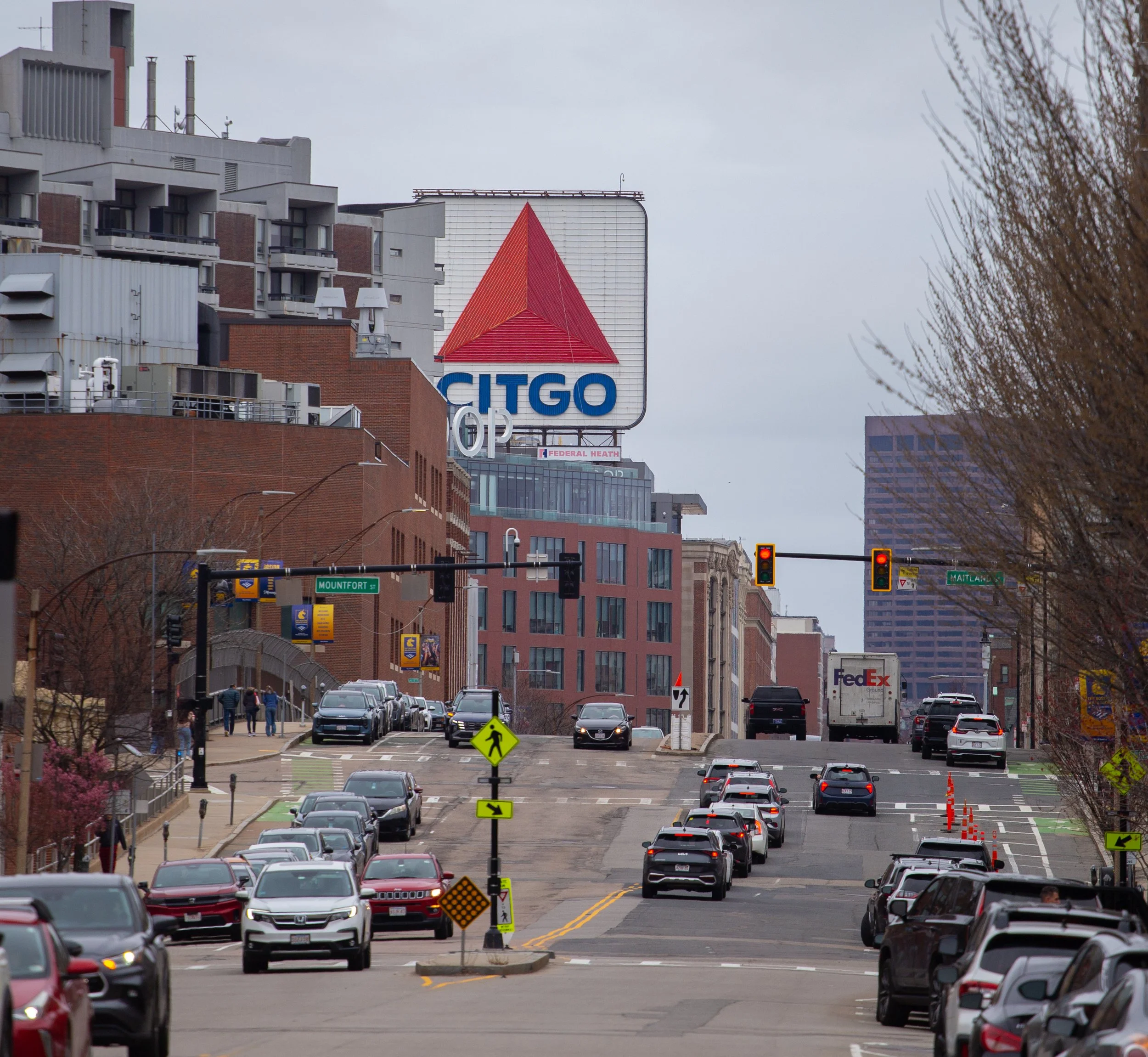
Famous CITGO sign
Coolidge Corner is the first place you see the famed CITGO sign that has guided runners to the finish line. Installed in 1940 as a Cities Service sign and later rebranded in the 1960s when the company became Citgo, its red triangle has watched generations of runners pass beneath it For decades, runners have learned to look for it as a promise, a signal that the abstract idea of finishing is about to become real. And once you pass the sign you have one mile to go to the finish line.
Past Massachusetts Avenue, turn right on Hereford. Left on Boylston. There is Copley. There is the finish line. The John Hancock Tower catches the morning light, and the street is wide open and yours.
Go get changed. Make a reservation. Tonight, you are eating somewhere good.