
Cobblestones | Prague
Prague
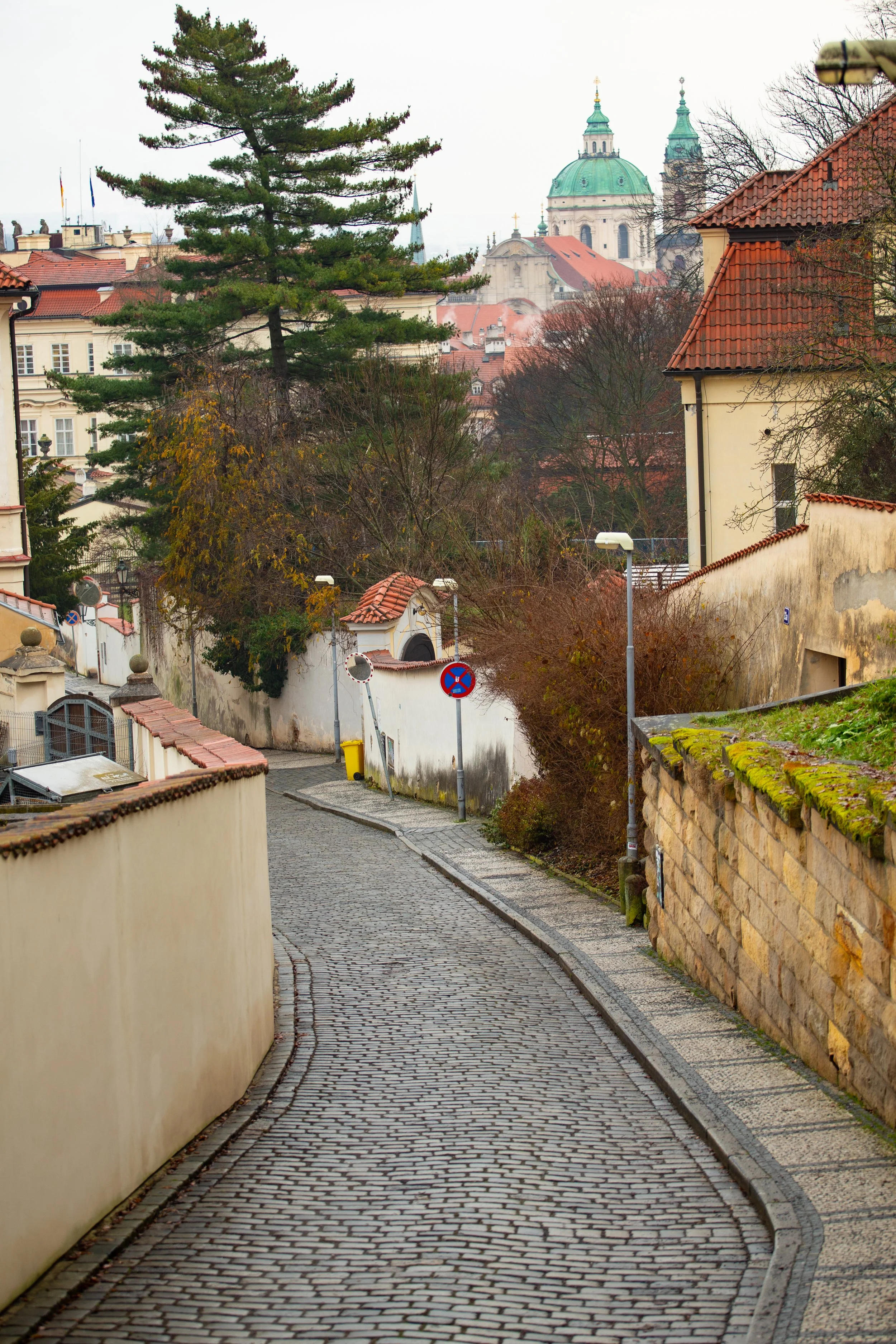
Cobblestone Vlašská Street
As runners, we spend an unreasonable amount of time thinking about surfaces—what our feet touch, what our joints absorb, what our brains negotiate mile after mile. Gravel is ideal: soft, forgiving, cooperative. Asphalt will do in its absence. Concrete sidewalks are to be avoided unless absolutely necessary.
But cobblestones?
Cobblestones are a runner’s moral dilemma—ancient beauty paired with orthopedic betrayal. And in Prague, especially around Prague 1, you don’t get a choice. Prague 1 district holds the entire medieval heart of the city—Staré Město (Old Town), Mala Strana (Lesser Town), Josefov (the Jewish Quarter)—and most of its streets are paved in centuries-old stone. Running on them is punishing. So, to numb the pounding reverberating up my shins, I turned my attention downward and began studying the patterns and the history beneath my feet.

Mala Strana (Lesser Town)
If cobblestones challenge runners, they must be a near-impossible landscape for wheelchair users or anyone with mobility issues. It’s a reminder that beauty often comes with barriers—not for everyone, not equally. Still, the distraction worked. I found myself increasingly absorbed by the artistry beneath my feet. Prague reveals its beauty not only in its spires and façades but also in the quiet geometry underfoot. The cobblestones are a kind of archive—of labor, patience, craftsmanship—an entire visual culture written in stone.
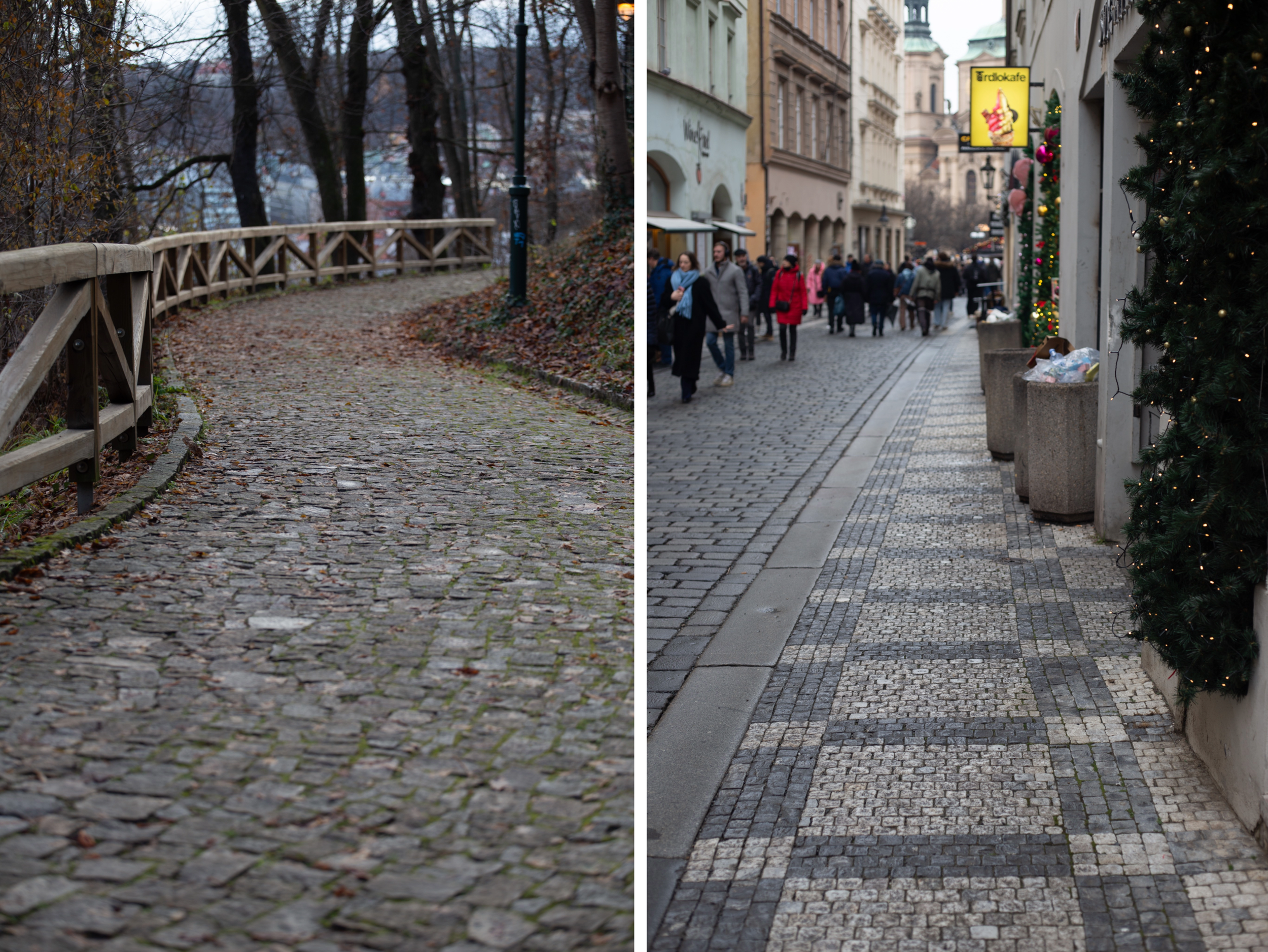
Cobblestones in Prague
My run began in Nové Město (New Town) at our hotel, the Almanac, where even the entrance announces itself in cobblestone letters, the name set into the pavement like a signature. From there I jogged toward Wenceslas Square (Václavské náměstí), already sparkling with Christmas-market anticipation. But the stones here carry heavier stories. Near the top of the square lies a simple cross etched into the cobblestones—a memorial to Jan Palach, the university student who, in 1969, set himself on fire in protest of the Soviet occupation, hoping to rouse the nation from what he called “the lethargy of communism.”
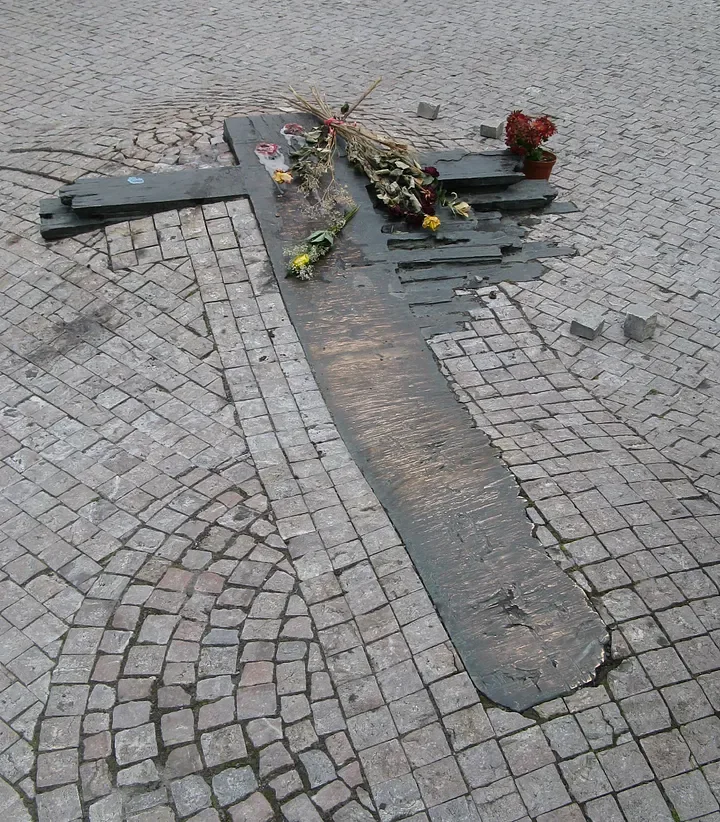
Jan Palach Memorial on Wenceslas Square
Communism did eventually fall—Czechoslovakia’s regime collapsed in November 1989—but the stones themselves hold another unsettling chapter. In preparation for Mikhail Gorbachev’s 1987 visit, the Communist authorities repaved parts of the square using fragments of Jewish tombstones cut into paving blocks. Gorbachev spent an hour walking on those cobbles.
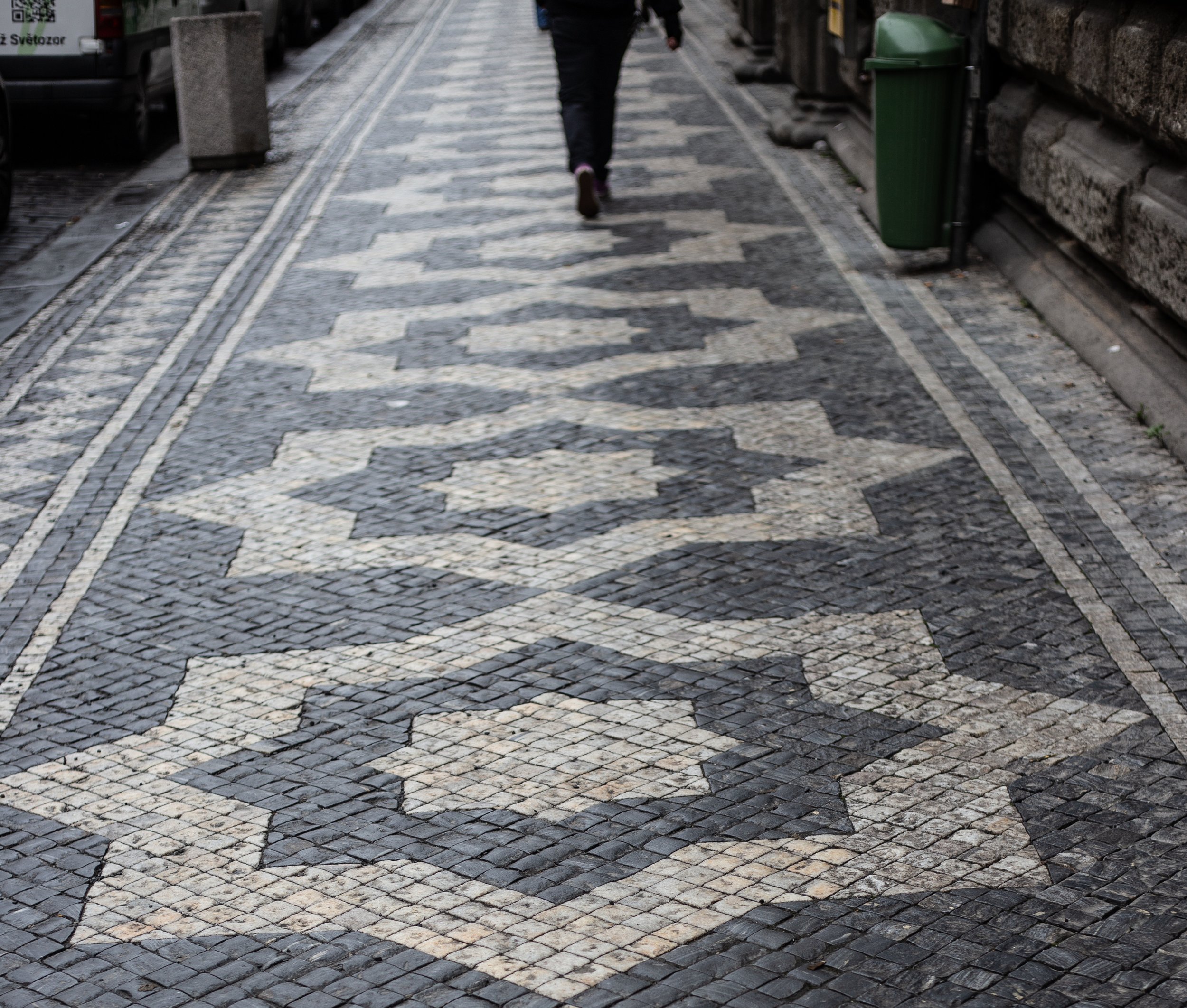
Walking on Cobbles
Today millions of tourists and locals alike stroll—and runners like me glide or stumble—across them, unaware that some of the stones originate from Jewish cemeteries that once held lives, names, and histories. It’s a quiet sorrow layered onto a larger one. On the eve of World War II, Czechoslovakia’s Jewish population numbered around 350,000; by 1946, only about 50,000 remained. During the Communist era, state-sanctioned antisemitism and waves of emigration reduced the community even further. By the late 1980s, fewer than 8,000 Jewish residents remained in the entire country.
So I kept running, carrying that history—uneasy, insistent—under every footfall.
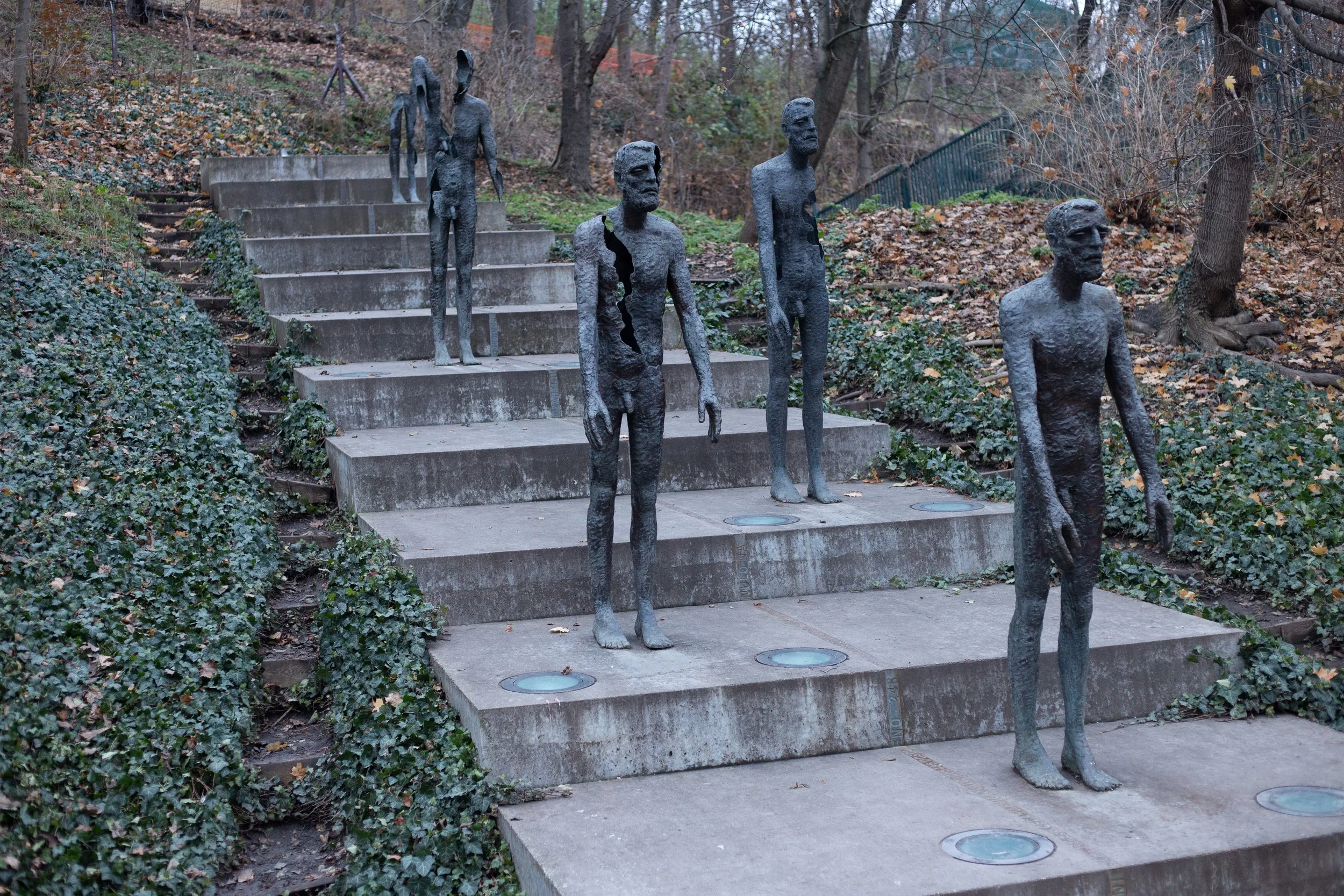
Memorial to the Victims of Communism
As I moved toward Old Town, I reached one of Prague’s oldest surviving cobblestone streets: Řásnovka ulice. Its original quartzite stones are still in place, stretching from Haštalské náměstí to Štefánikův most, with a thin raised line bisecting the street—an old drainage channel turned accidental ornament. The stones themselves are stubborn: thick, uneven, unfriendly to runners. But visually? They’re masterpieces.
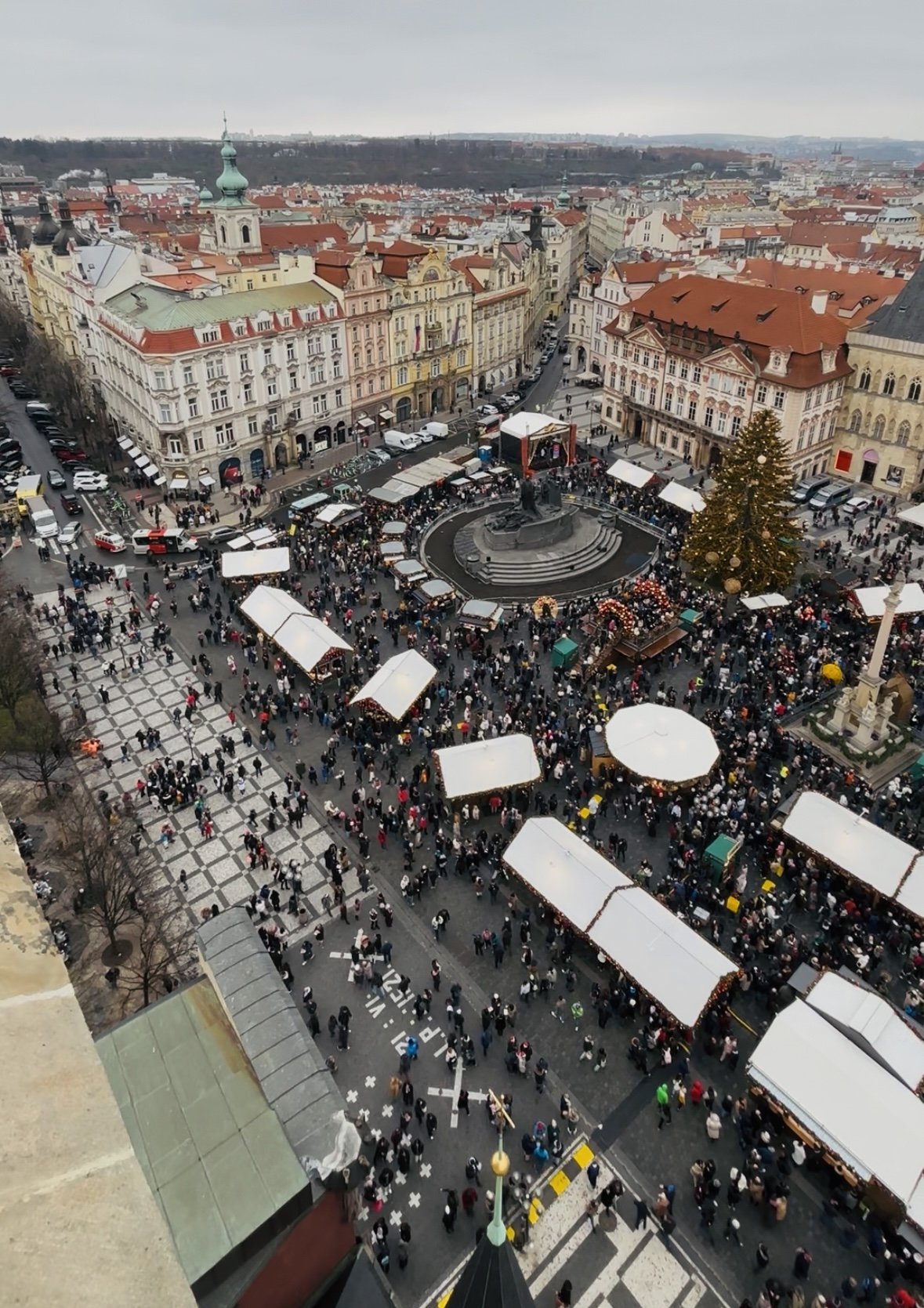
Christmas Market in Old Town Square
“Near the lower center of the image, you can see the 28 cobblestone crosses and the date—June 21, 1621—marking the execution of 27 men (3 nobles, 7 knights, and 17 burghers) by Jan Mydlář”
From there, I followed the cadence of the stones into Old Town Square (Staroměstské náměstí), Prague’s grand public stage. The square glowed with Christmas-market life—towering tree, decorated stalls, music drifting through centuries-old façades. It is the city’s heartbeat, and like any true heart, it holds memory. Executions once took place here, including the 1621 mass execution carried out by Jan Mydlář, whose grim profession is difficult to imagine against today’s festive lights. The square saw fierce street fighting during the Prague Uprising in May 1945, and later erupted in joy for national celebrations, including the legendary 1998 Olympic victory of the Czech hockey team.
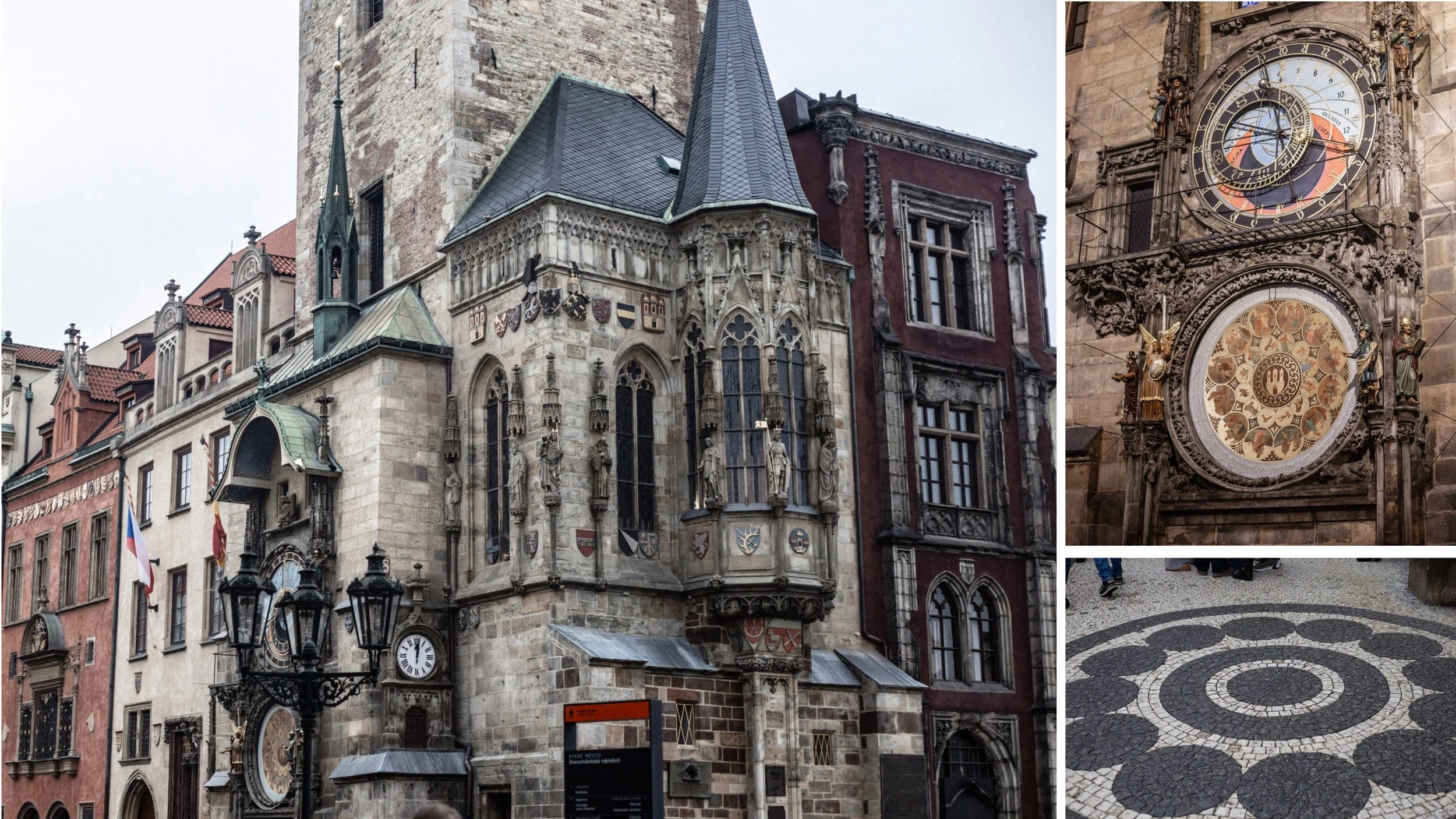
Orloj - Prague’s Astronomical clock
And then I stopped, as one must, before the Orloj, Prague’s astronomical clock. Mounted on the southern wall of the Old Town Hall, it performs three roles at once: an astronomical dial mapping the movements of the sun and moon, a parade of saints and apostles appearing hourly, led by a skeleton representing Death, and a calendar dial encircled by painted medallions. Local legend says the city will suffer if the clock is neglected, and that a ghost—perched somewhere in its mechanisms—will nod in warning. Beneath this masterpiece lie cobblestone patterns as elaborate as the clock itself, circular designs that seem to echo the turning of celestial gears above. Most Prague streets use squares in white, brown, and grey. But here, the stones form circles—time rendered in stone.
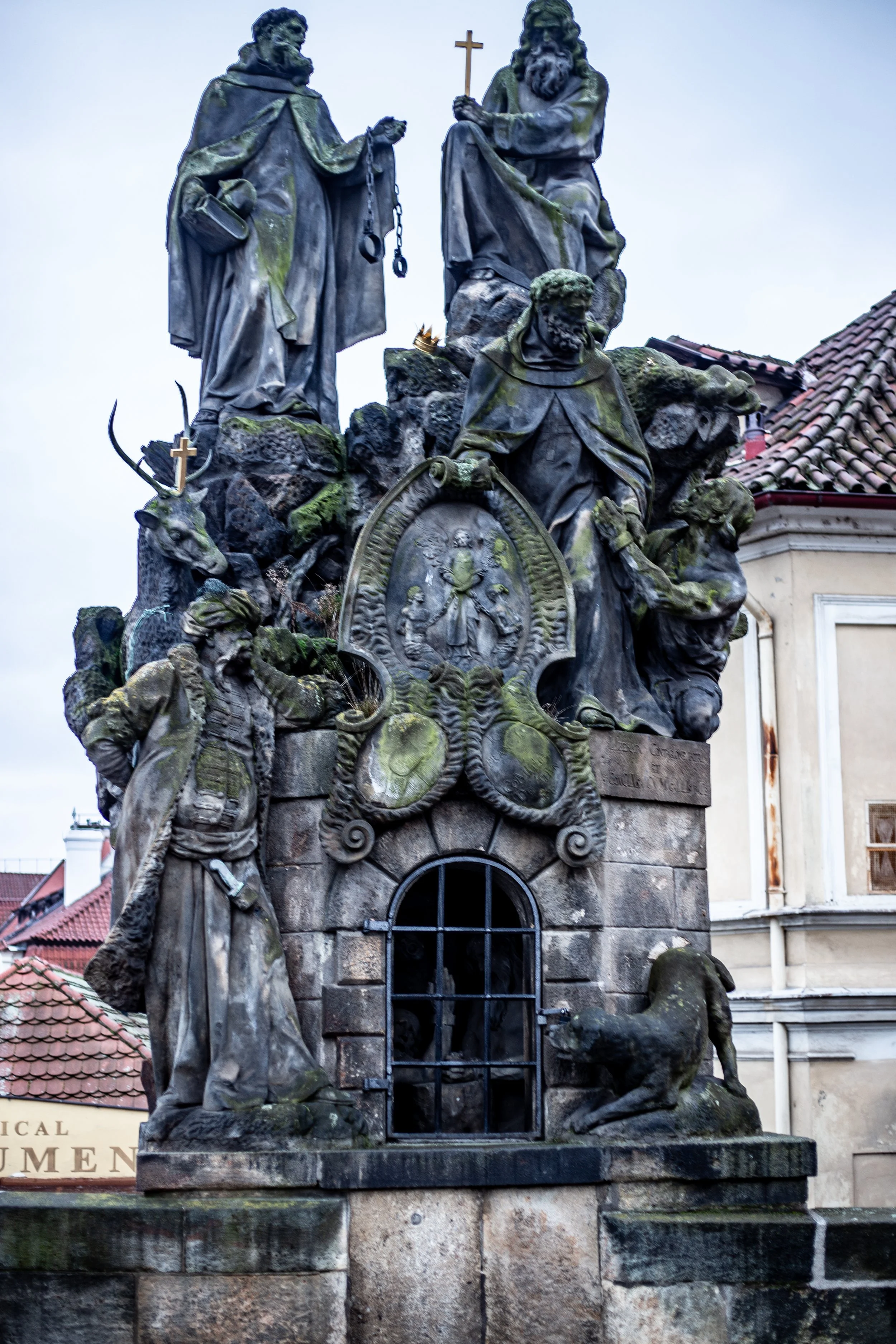
Statue of Saints John of Matha, Feliz of Valois, and Ivan on Charles Bridge
It depicts Christians held captive by the Ottoman Turks, alongside the saints who founded the religious order dedicated to freeing enslaved Christians
Eventually I continued toward the Charles Bridge. The view is what draws most people—the river, the silhouettes of saints, the towers watching everything—but for runners, timing is everything. To enjoy the bridge in motion, you must arrive before 7 a.m. By nine, it is a human river, shoulder to shoulder well past sunset. The cobblestones here may date to the 14th century. Construction of the bridge began in 1357, but some stones are thought to be even older—relics from the 12th-century Judith Bridge washed away by a flood. Running across them is like running across history’s spine.
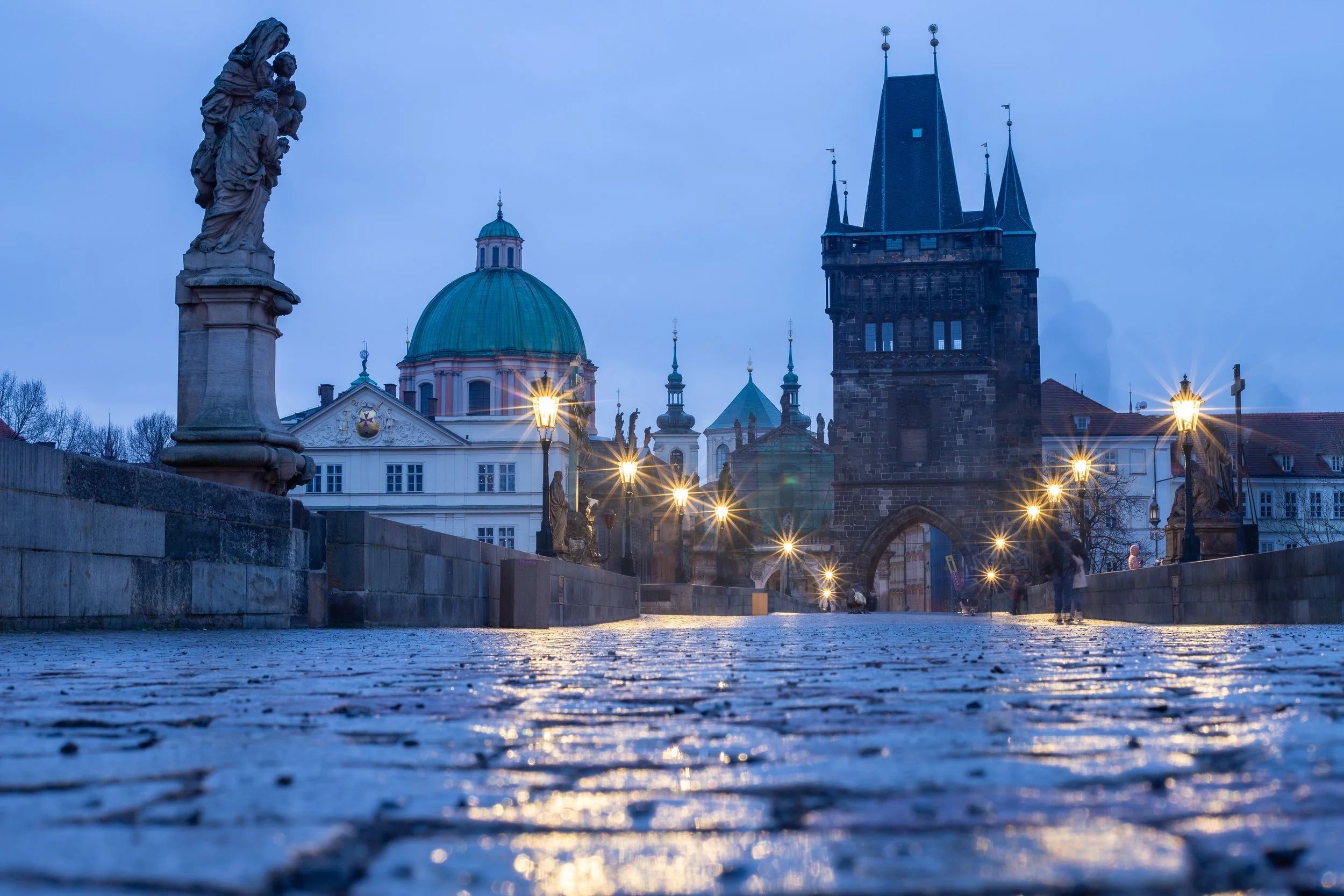
Charles Bridge Before Sunrise
After this little Charles Bridge detour, I turned back toward the Park of National Awakening (Park Národního probuzení) it is here at this park I found some of the most beautiful pavement designs—intricate mosaics that made me forget, for a brief moment, the ache steadily blooming in my shins.
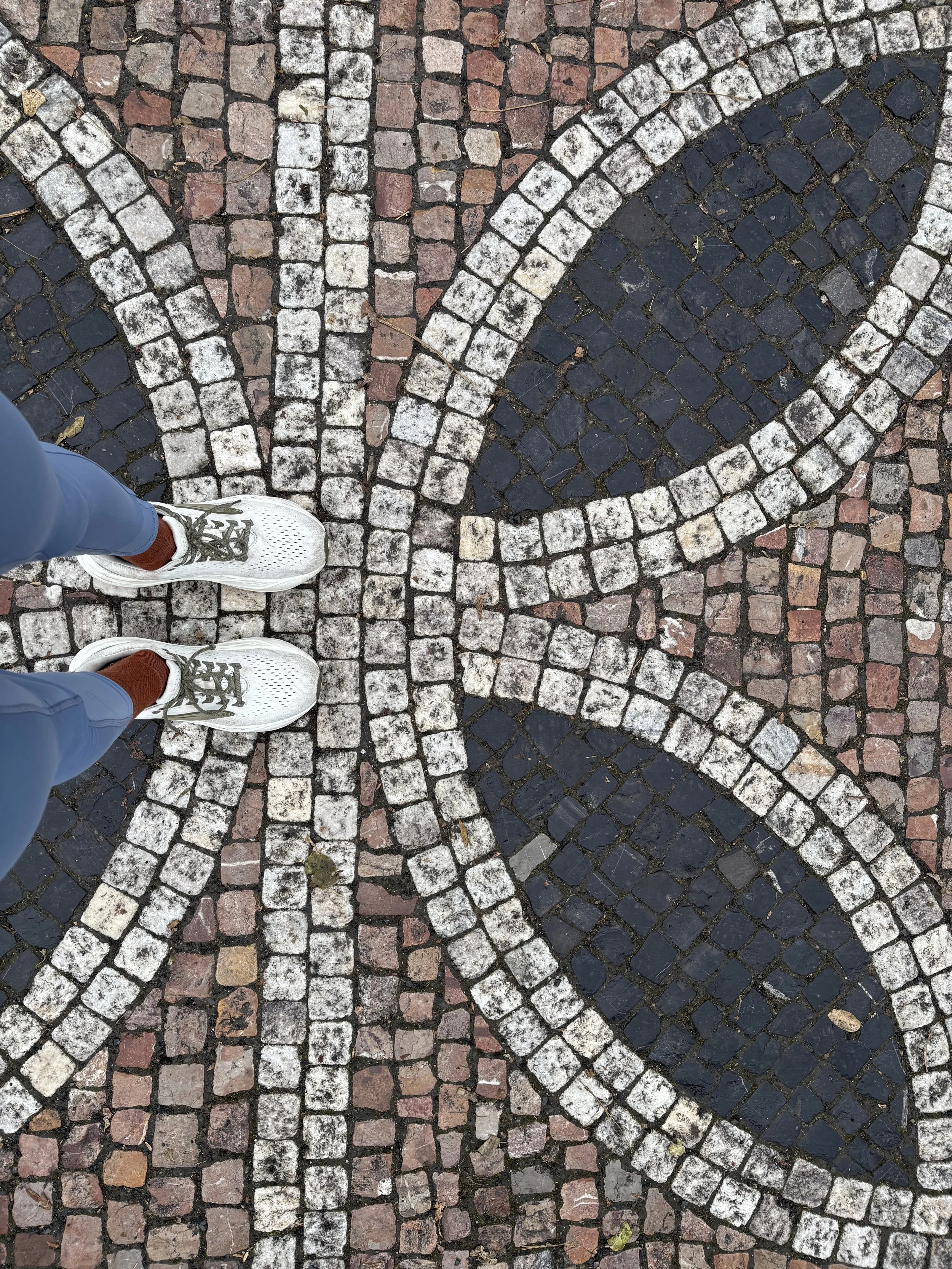
Intricate Cobblestone Patterns near Park of National Awakening (Park Národního probuzení)
Eventually the message became clear: enough cobblestones for one day. I headed back toward the hotel, grateful for the adventure and the art underfoot but also grateful for softer surfaces. For runners wishing to avoid the medieval ankle-destroyers, head east towards Karlin. Within a mile or two, the cobblestones surrender to smooth riverside asphalt trail, leading you into other neighborhoods of Prague—still beautiful, still historic, but far kinder to your legs.
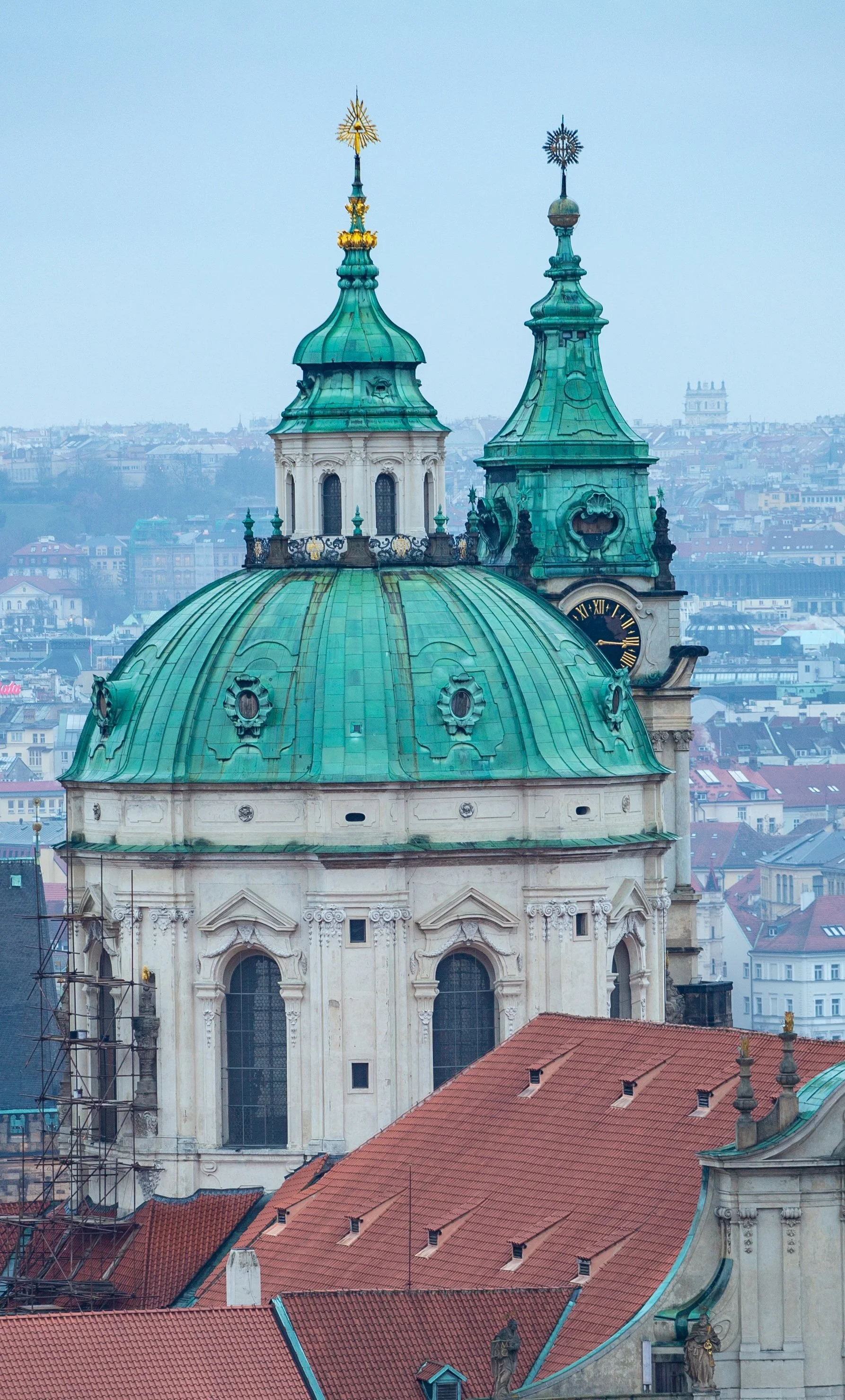
St. Nicholas Church
